#8 Crushed Stone on Wisconsin Clay, Sand and Ridge Soil
Wisconsin frost makes water control important around hardscape; #8 Crushed Stone fits planned drainage, permeable pavers, and concrete work.
- Size: About 3/32 inch to 3/8 inch
- Grading: #8, clean with little to no fines
- Type: Crushed stone
From $446 for 1 ton, delivery included (larger loads cost significantly less per ton)
Free delivery included
Free delivery anywhere in Wisconsin
Pick a delivery date
Weekday delivery, earliest Oct 29
“Had crushed stone delivered by them and it was a great experience. The free delivery was a huge plus, and the driver was friendly and careful about where he placed it. I'd definitely order from them again.”
Mark C. · Verified Buyer
Get a Free Quote
Fill out the form and our sales team will get back to you within the hour.
Size and Grading
- Size
- About 3/32 inch to 3/8 inch
- Grading
- #8, clean with little to no fines
- Type
- Crushed stone
The ground decides this purchase more than the project does. On the tight lake clays that run from Kenosha up through Milwaukee to Green Bay, water has to be given a route or it will not take one, and #8 Crushed Stone is often the route. On the deep sand of the Central Sands the water already leaves, and the reason to buy clean stone there is to keep sand out of a pipe zone. On the thin silt loam over dolomite on a Driftless ridge, the water disappears into the bedrock and the stone is there to hold a detail together while it does.
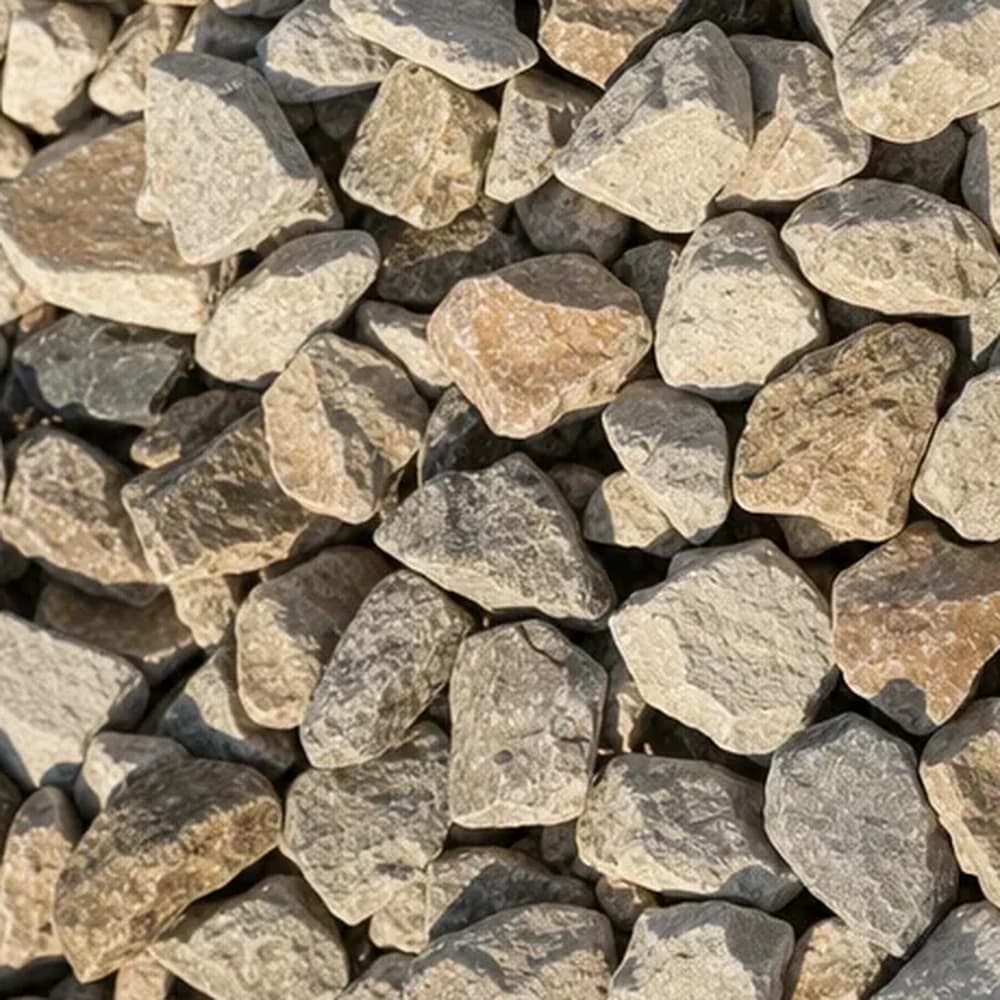
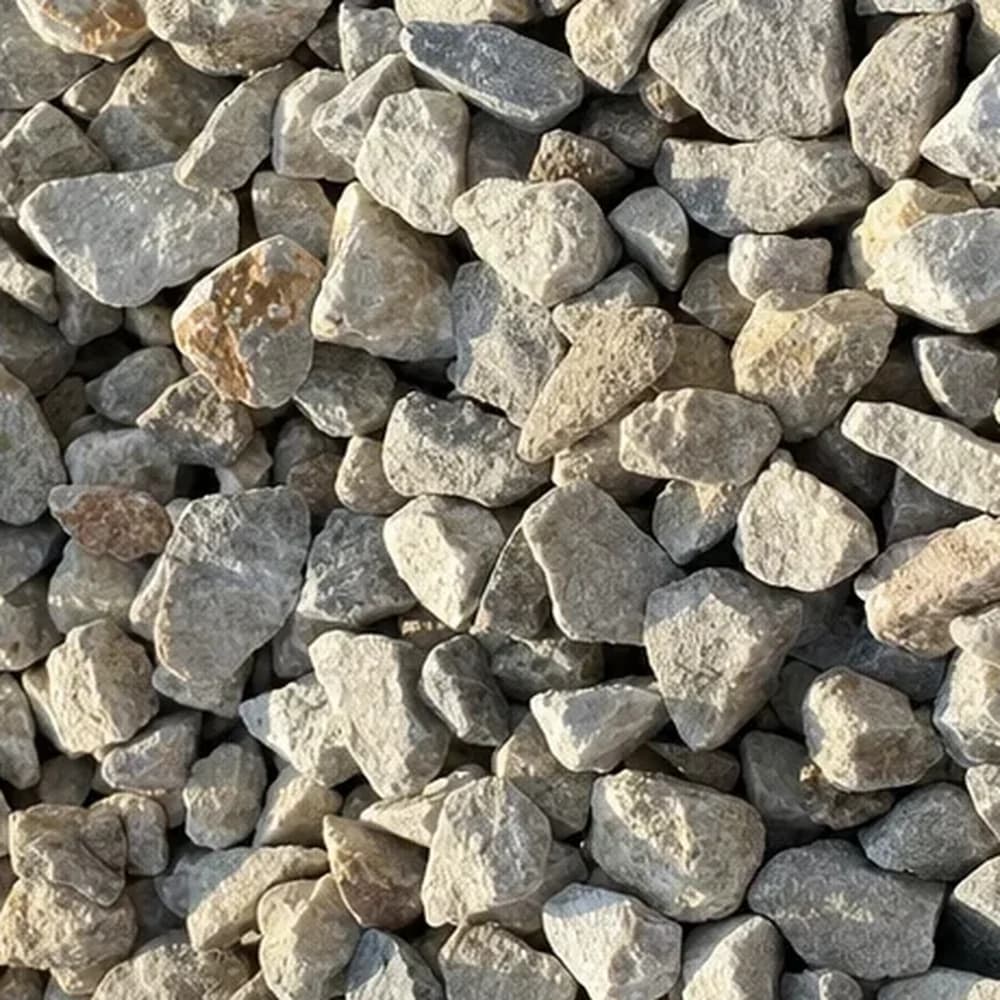
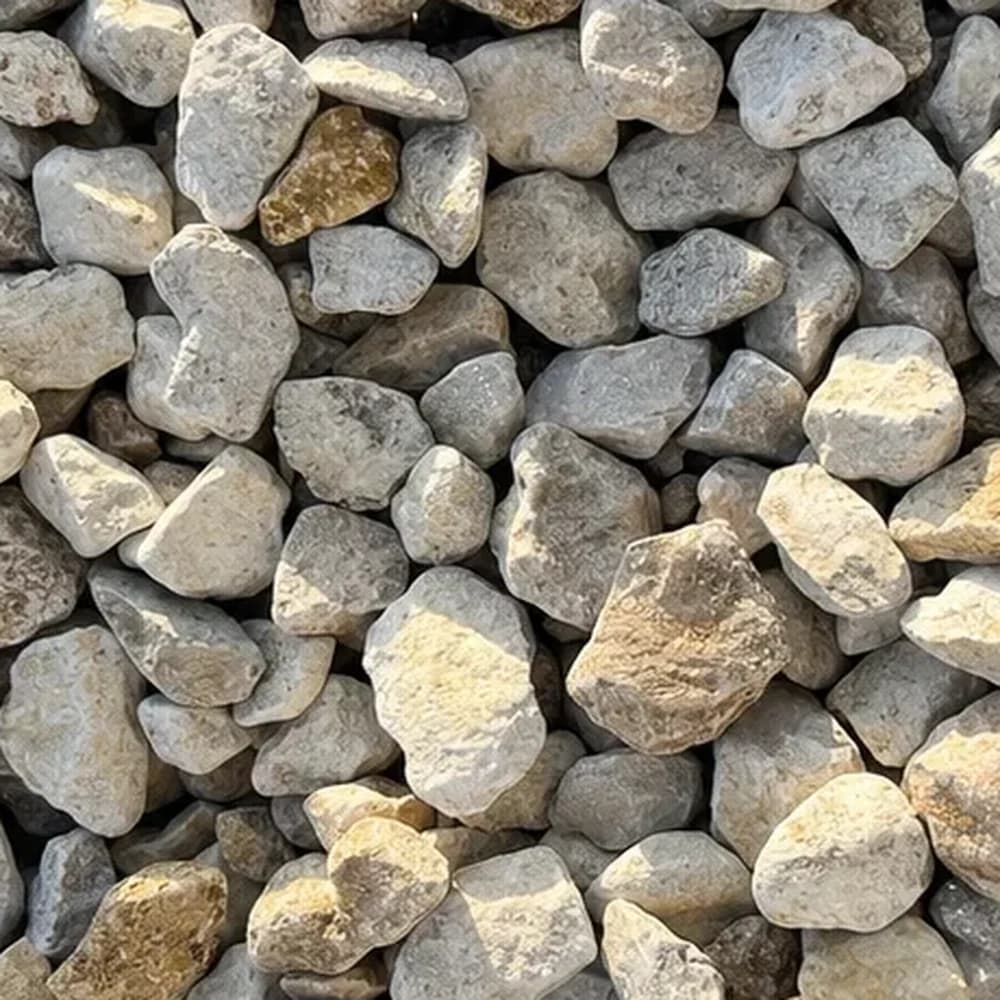
Size is about 3/32 inch to 3/8 inch. The grading is #8, clean with little to no fines. The type is crushed stone, so every piece has broken faces that catch on each other.
Choose #8 Crushed Stone if water has to move, skip it if the layer has to hold
Choose it when:
- Water must pass through the layer rather than around it, and it must keep passing through in five years.
- The detail is narrow: a joint, a pipe surround, a bedding course under permeable units.
- The specification asks for a clean, washed-looking small aggregate with no dust on it.
- A concrete mix calls for a smaller coarse aggregate.
Skip it when:
- The layer is carrying weight. Open stone with no fines will not compact into a load-bearing base.
- You want a walking or driving surface. Loose small stone with no binder moves underfoot and under a tire.
- You are leveling. Screeding needs fines, and this has none by design.
Permeable paver details, pipe zones and drain layers
- Permeable interlocking pavers use this size in the bedding course and in the joints between the units, so rainfall goes straight down through the surface rather than running off it.
- A drain field or a stone bed uses it where the voids need to stay open under a continuous water load.
- Pipe bedding is a good fit. The pieces are small enough to work in under a haunch and around a fitting, and large enough that they will not wash through a slotted line.
- A trench in slow lake clay wants this rather than sand, because sand in clay ground turns into a wick that holds water instead of shedding it.
Keeping the surrounding soil out of the detail
A clean stone is a consumable if you let soil reach it.
- Wrap the stone with separation fabric wherever clay, silt or peat surrounds it, and lap it over the top.
- Keep topsoil and mulch above the finished grade of any exposed stone, not draining into it.
- On sand, the fabric is working in the other direction, stopping sand migrating up into the voids from below.
- Sweep or vacuum paver joints clear of sediment rather than topping them up over the top of it.
Not the base, and only sometimes the surface
There is a habit of treating any crushed stone as interchangeable, and in a Wisconsin build it is not. The layer that resists frost movement and carries load is a dense, compacted material: 3/4" Traffic Bond for a drive or a pad, with Breaker Run below it where the ground is soft. This grade goes into the part of the build that handles water.
As a visible surface it works in a narrow band: a small bed, a strip along a drip line, the joints in a permeable patio. For a path people actually walk, a finer and more compactable material such as 3/8" Crushed Stone is more comfortable and stays where it is put.
Where it sits between #67 above and #89 below
Three clean-looking grades sit close together in this catalogue and they are not swaps for each other. The next grade up runs 1/4 inch to 3/4 inch, which is the one to take when the trench is deep, the flow is heavy or a concrete spec asks for a coarser aggregate; the larger pieces leave larger voids for the same volume of stone. This grade at 3/32 to 3/8 inch is the one that still works in a narrow detail, in under a pipe haunch or into a paver joint, without losing its openness. Joint and bedding grit looks nearly identical on the pile but runs from about 3/8 inch down to fines, and those fines are the whole difference: it packs and binds where this one stays open. Ordering by size alone is how a drainage trench ends up packed with a material that was never meant to drain.
Counting yards for a flagstone walk, bed paths and a play area
Square feet times depth in inches divided by 12, divided by 27 for cubic yards. This site publishes roughly 2,800 lb per cubic yard for the #89, #8 and 3/8 inch chip family, or 1.40 tons per yard, so yards times 1.4 gives tons. Hypothetical jobs:
- Flagstone walkway, 4 ft by 30 ft, open bedding at 1.5 inches: 120 sq ft x 0.125 = 15 cubic feet. 15 divided by 27 = 0.6 cubic yards, or about 0.8 tons.
- Paths between raised vegetable beds, 3 ft wide with 48 ft of total run, at 3 inches: 144 sq ft x 0.25 = 36 cubic feet. 36 divided by 27 = 1.3 cubic yards, or about 1.9 tons.
- Drainage layer under a 26 ft by 30 ft playground surface at 4 inches: 780 sq ft x 0.333 = 260 cubic feet. 260 divided by 27 = 9.6 cubic yards, or about 13.5 tons.
Open stone settles very little, so the ordered volume is close to the finished volume. Run the figures through the Stone Calculator if you want them confirmed before you commit.
Set a quantity and a delivery date here on the product page. Delivery is arranged at checkout using your ZIP code, so decide in advance where a loaded truck can tip and still get out.
Quickly Calculate How Much You Need
Material: #8 Crushed Stone
How to Measure
Measure the length and width of your project area in feet
Decide on depth in inches (2" for landscaping, 4" for driveways)
Enter the values above and we'll calculate the tonnage you need
Need help figuring out the right amount? We can help!
Call or text us at (414) 485-9466 and we'll help you calculate the right quantity for your project.
Not sure how much you need? The Stone Calculator has depth guides, coverage charts and worked examples for this material.
Frequently Asked Questions About #8 Crushed Stone
Customer Reviews
Got crushed stone from the team, ordering was no hassle and I'd definitely order again and recommend them.
Sandra F. · Waukesha, WI · Verified Buyer
Needed crushed stone for a driveway project, and the team made it super easy. The free delivery was a huge help, and everything showed up right when they said it would. Really happy with the crushed stone and I'd definitely order again.
Nate L. · Kenosha, WI · Verified Buyer
Had crushed stone delivered by them and it was a great experience. The free delivery was a huge plus, and the driver was friendly and careful about where he placed it. I'd definitely order from them again.
Mark C. · Green Bay, WI · Verified Buyer
Ordered crushed stone from Wisconsin Rock Supply and they kept me updated the whole time, with delivery showing up right on the day they promised.
Susan H. · Racine, WI · Verified Buyer
Went with Wisconsin Rock Supply for crushed stone and I'm really happy with how it turned out. The driver was friendly and careful about where he placed it, which made the whole thing easy.
Jason R. · Waukesha, WI · Verified Buyer
#8 Crushed Stone has 5 verified customer reviews with an average rating of 5 out of 5.