#89 Crushed Stone: Joint Grit That Binds, Not Drains
Wisconsin freeze-thaw weather calls for a close-fitting finish material, and #89 Crushed Stone compacts well in paver work and flagstone bedding.
- Size: About 3/8 inch down to fines
- Grading: #89, carries some fines
- Type: Angular crushed stone
From $420 for 1 ton, delivery included (larger loads cost significantly less per ton)
Free delivery included
Free delivery anywhere in Wisconsin
Pick a delivery date
Weekday delivery, earliest Oct 29
“Went with them for crushed stone and I'm really happy with how it turned out. Pricing was fair, and the delivery was easy.”
Bill H. · Verified Buyer
Get a Free Quote
Fill out the form and our sales team will get back to you within the hour.
Size and Grading
- Size
- About 3/8 inch down to fines
- Grading
- #89, carries some fines
- Type
- Angular crushed stone
Most loads of this leave for the same kind of job: a paver or flagstone patio somewhere on a Wisconsin lot where the frost will lift everything a little each winter, and the owner wants the joints tight enough that nothing rocks when it comes back down. #89 Crushed Stone is the material that gets swept into those joints and screeded under those stones, and the reason it works is the fines it carries.
What it looks like in the wheelbarrow and in the joint
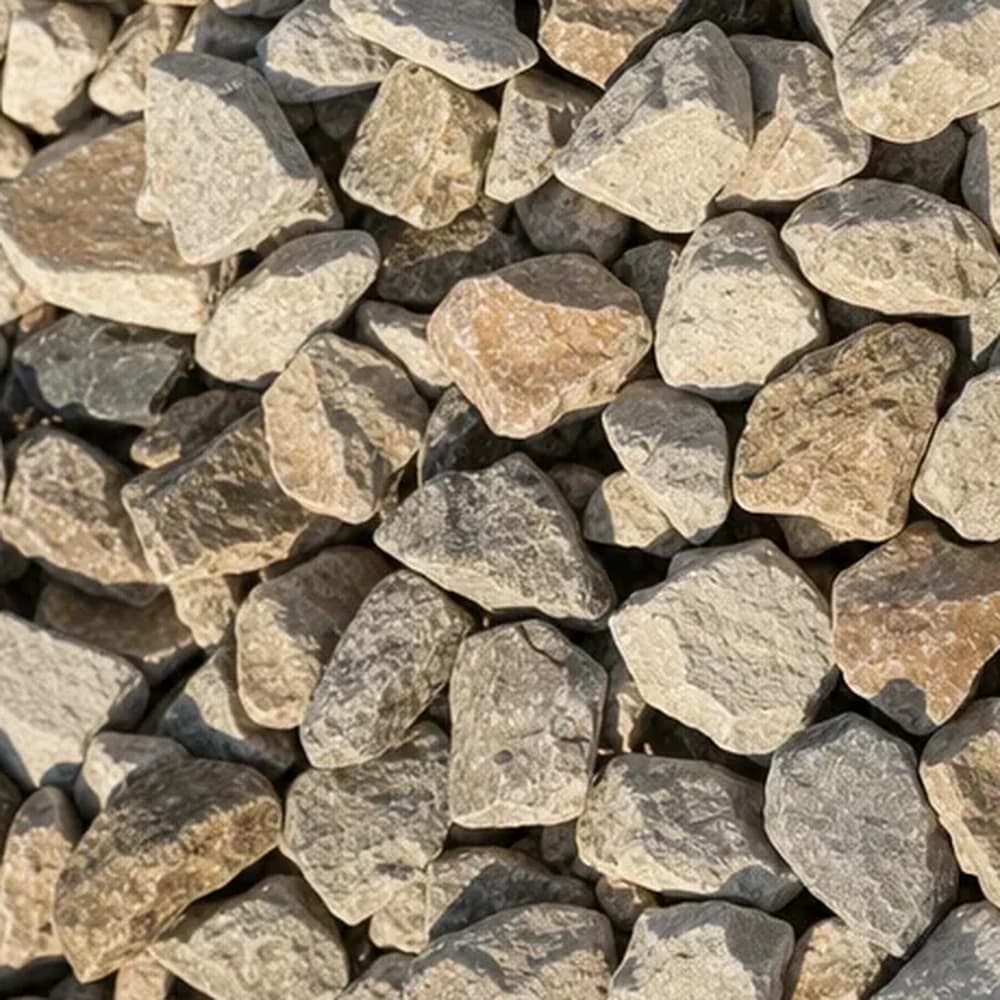
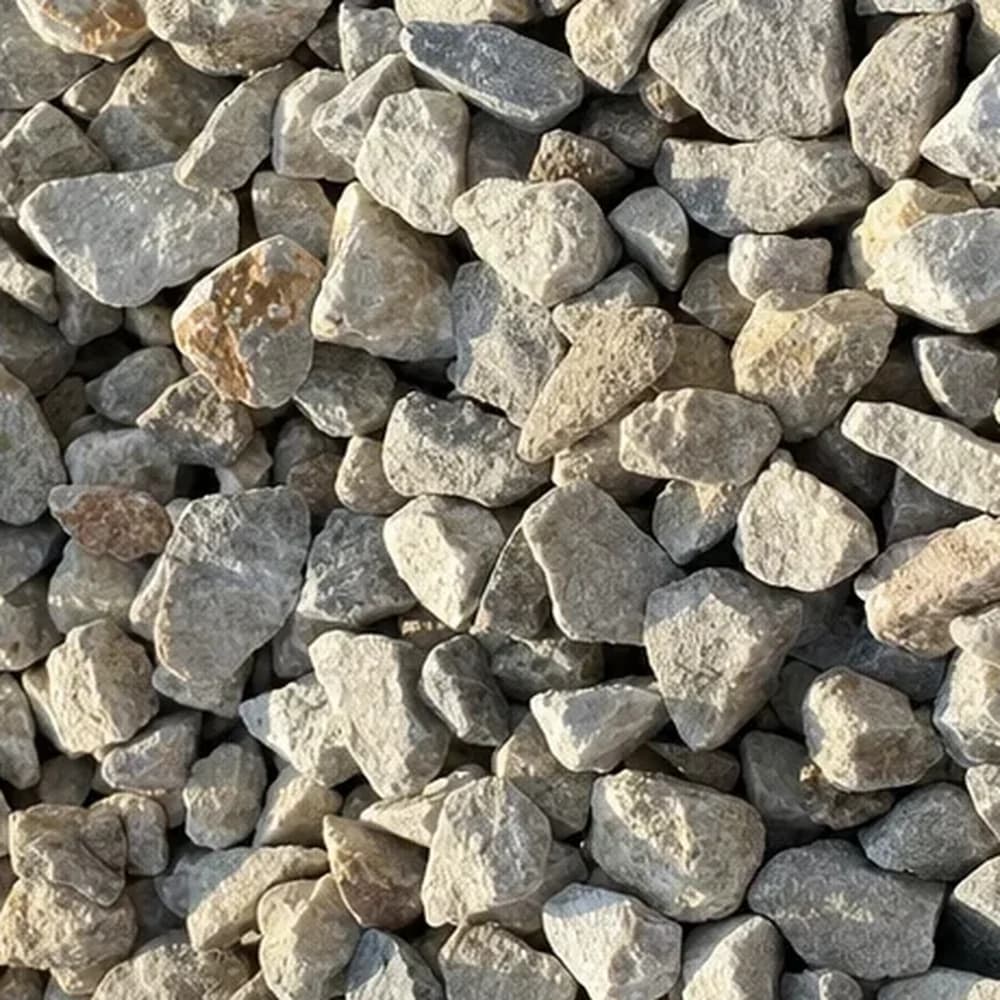
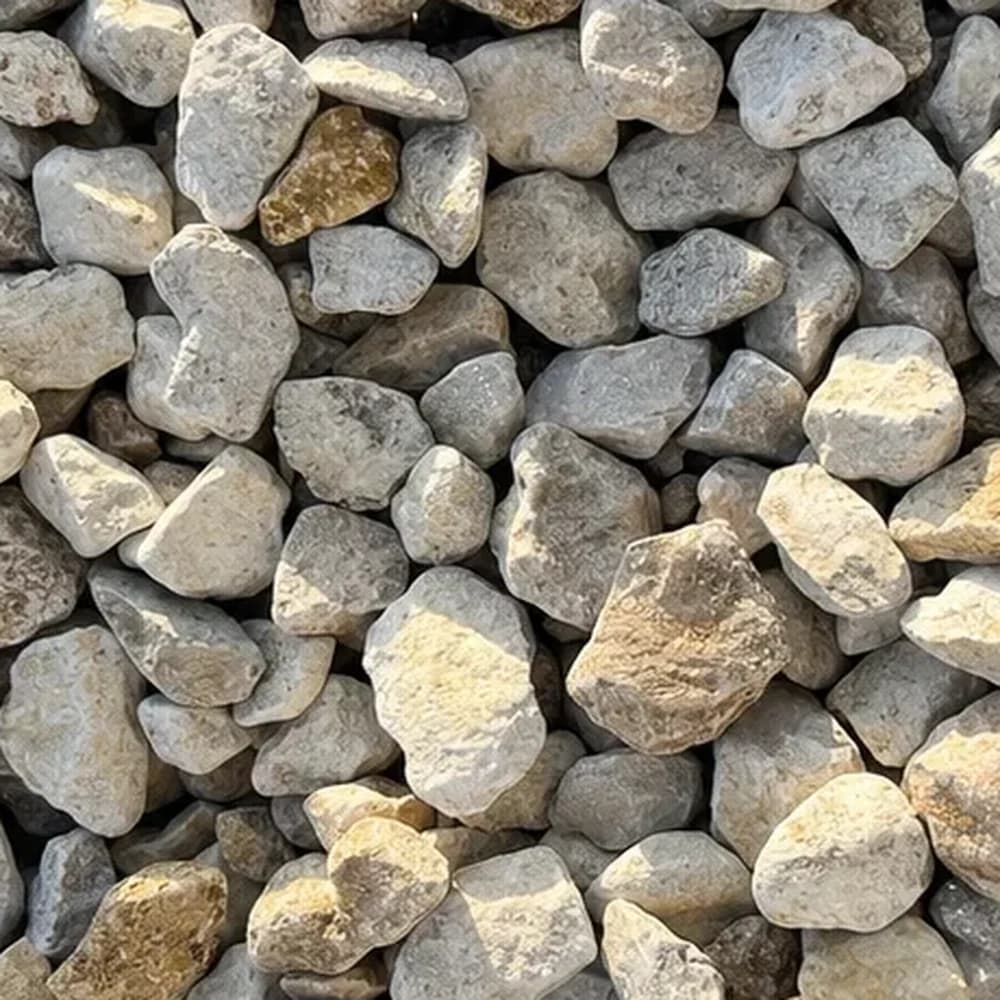
- Pieces top out around 3/8 inch and run all the way down to fines, so the pile looks gray and close rather than open and stony.
- Every face is broken. Angular grit catches on itself and on the sides of a joint instead of rolling.
- Squeeze a damp handful and it holds its shape briefly. That is the fines doing what an open stone cannot.
- Swept into a joint and watered, it packs down tight and sits below the paver chamfer instead of drifting out.
- Under flagstone it screeds to an even plane and stays there once compacted.
The finishing work it does above the frost layers
- Joint fill between pavers, flagstone and brick, swept in and consolidated in stages.
- The bedding course beneath a flagstone or paver path, where an even setting plane matters more than drainage.
- Chip-seal work, where fine angular particles bond into the surface treatment.
- Concrete mixes that specify a small coarse aggregate.
- A tidy finish strip where a hard surface meets planting, and nothing is meant to move.
Three jobs it will quietly ruin
Because it carries fines, it binds. That is useful above the base and a problem below or behind anything that has to drain.
- A retaining wall backfill. The stone column behind a wall exists to let water out, and fines close it off. Use #57 Stone or Drain Rock there.
- A pond or shoreline edge. Wave action and high water take fine material away in a season. Armor stone is the answer, which on this site means RipRap.
- A foundation or perimeter drain. Same reasoning as the wall, and once silt and fines set up in a trench there is no flushing them out.
Keep this material above the parts of a build that handle water, and let an open-graded product do that work.
Depth in a joint, depth under a stone
- Joints get filled in stages. Sweep, water, let it settle, sweep again. A single heavy fill bridges and leaves voids that appear as dips a month later.
- A bedding course under flagstone or pavers is thin. It is a setting layer, not a structural one, and the compacted base beneath it carries the load.
- Order to loose depth. Everything here compacts down, so the finished thickness is less than what you spread.
- Damp beats dry. Wet fines travel into the gaps; dry fines bridge across them.
- On the lake clays through the Fox Valley and around Green Bay, and on Driftless silt loam on a grade, build the base deeper before you worry about the setting layer. Frost will lift a patio regardless; uniform support is what lets it settle back flat.
Tonnage for splash pads, a wall and a lakeside terrace
Square feet times depth in inches divided by 12, then divided by 27 for cubic yards. The site publishes about 2,800 lb per cubic yard for the #89, #8 and 3/8 inch chip family, or 1.40 tons per yard. Three hypothetical jobs:
- Four downspout splash areas, each 4 ft by 7 ft, bedding at 2 inches: 112 sq ft x 0.167 = 18.7 cubic feet. 18.7 divided by 27 = 0.7 cubic yards, or about 1.0 ton.
- Lakeside flagstone terrace set back from the water, 16 ft by 20 ft, bedding at 1 inch: 320 sq ft x 0.083 = 26.7 cubic feet. 26.7 divided by 27 = 1.0 cubic yard, or about 1.4 tons.
- Retaining wall backfill, 36 ft long by 1 ft wide carrying 3.5 ft of stone: 36 x 1 x 3.5 = 126 cubic feet. 126 divided by 27 = 4.7 cubic yards, or about 6.5 tons. Order that one as open stone, not as this.
The last line is deliberate. The arithmetic is the same whichever product goes in the trench, and the density for #57 Stone on this site is the same 1.40 tons per yard, so the figure stands. The material does not. Check any of these in the Stone Calculator.
What tends to go on the same order
A patio order is rarely one material, and this grade is usually the smallest line on it.
- The compacted base underneath, which is 3/4" Traffic Bond on most lots and needs Breaker Run below it where the ground is soft or slow to drain.
- The setting course, if the design calls for a screeded bed rather than a swept joint. That is Screenings at 1/4 inch minus.
- The drainage that runs beside or behind the work, which is where the open grades belong.
- A little extra of this grade, kept dry under cover, for topping the joints after the first winter. Every paver surface loses some, and matching it a year later is easier if you already have it.
Pick a tonnage and a delivery date on this page. Delivery is arranged at checkout from your ZIP code, so choose a firm, dry drop, because fine material that sits in a puddle is miserable to shovel.
Quickly Calculate How Much You Need
Material: #89 Crushed Stone
How to Measure
Measure the length and width of your project area in feet
Decide on depth in inches (2" for landscaping, 4" for driveways)
Enter the values above and we'll calculate the tonnage you need
Need help figuring out the right amount? We can help!
Call or text us at (414) 485-9466 and we'll help you calculate the right quantity for your project.
Not sure how much you need? The Stone Calculator has depth guides, coverage charts and worked examples for this material.
Frequently Asked Questions About #89 Crushed Stone
Customer Reviews
Went with them for crushed stone and I'm really happy with how it turned out. Pricing was fair, and the delivery was easy.
Bill H. · Racine, WI · Verified Buyer
Went with Wisconsin Rock Supply for crushed stone, and it was solid material, plus the driver was friendly and careful about where he placed it.
Hank R. · Milwaukee, WI · Verified Buyer
Needed crushed stone for a driveway project and the team made it super easy. Delivery was on time, the crushed stone looked great, and I'd definitely order again and recommend them.
Wendy N. · Milwaukee, WI · Verified Buyer
Got crushed stone from Wisconsin Rock Supply, and it showed up right when they said it would.
Heather C. · Kenosha, WI · Verified Buyer
#89 Crushed Stone has 4 verified customer reviews with an average rating of 5 out of 5.