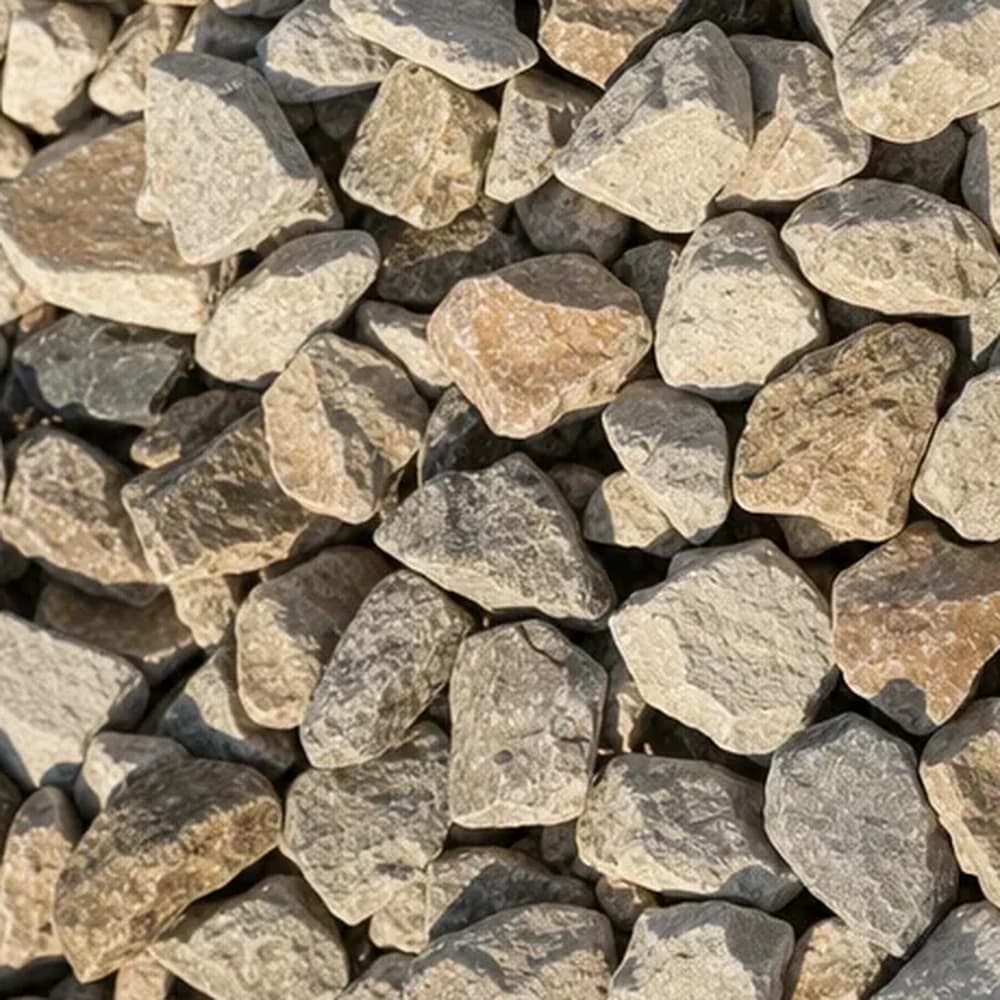
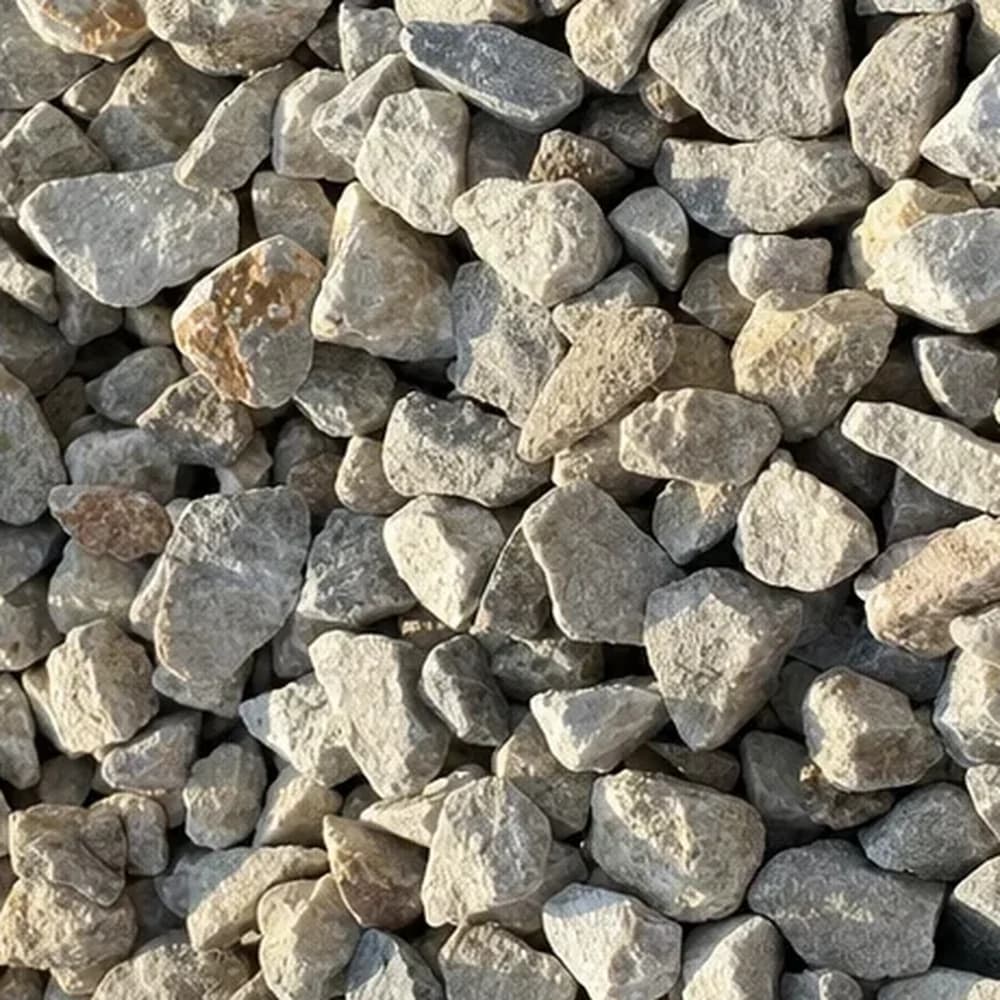
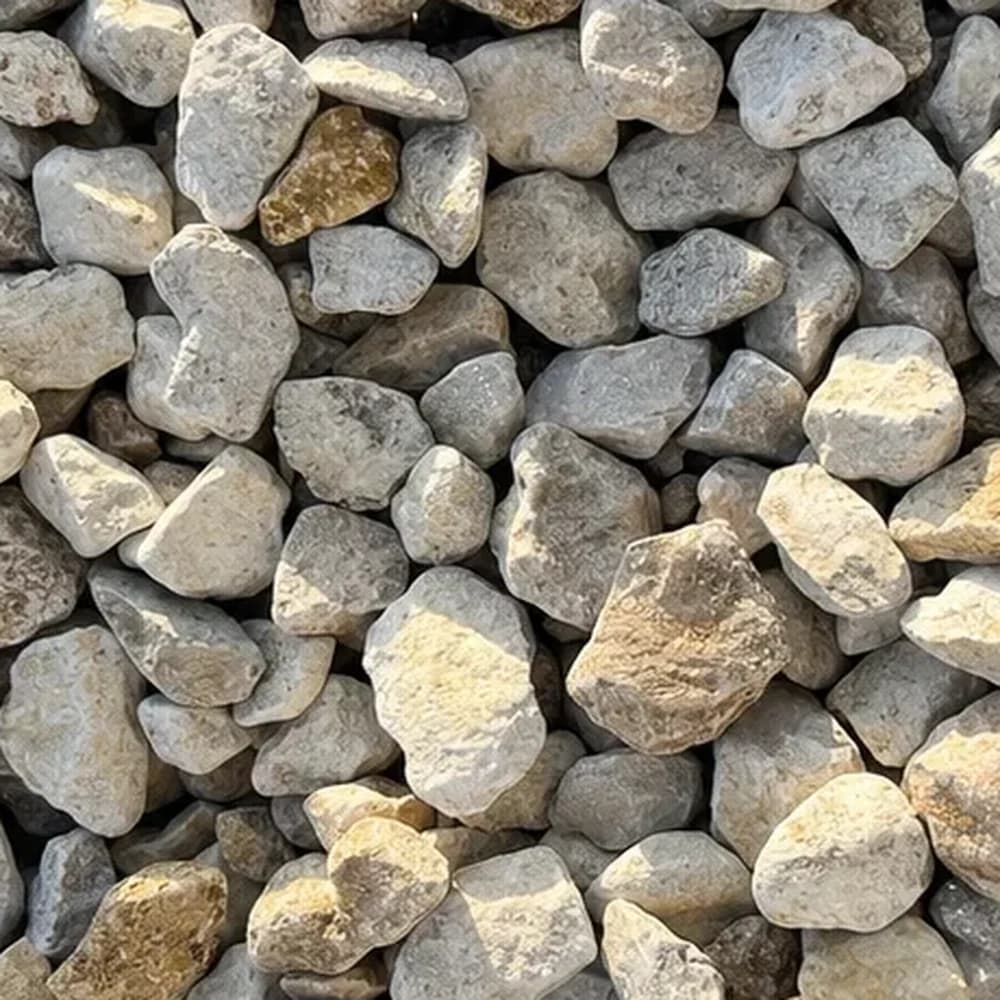
Screenings: the Fine Course Under a Wisconsin Patio
Also sold as #10 Stone Screenings
For a Wisconsin patio, Screenings provide the final leveling layer after the support beneath it has been built for deep frost.
- Size: 1/4 inch minus
- Grading: Stone dust and fine particles
- Type: Angular crushed stone
From $446 for 1 ton, delivery included (larger loads cost significantly less per ton)
Free delivery included
Free delivery anywhere in Wisconsin
Pick a delivery date
Weekday delivery, earliest Oct 29
“Went with Screenings from the team and felt the price was fair for what I got. Delivery showed up when they said it would, so I'm really happy with the whole thing.”
Rob R. · Verified Buyer
Get a Free Quote
Fill out the form and our sales team will get back to you within the hour.
Size and Grading
- Size
- 1/4 inch minus
- Grading
- Stone dust and fine particles
- Type
- Angular crushed stone
Most loads of Screenings ordered in this state end up in the same place: the last inch under a paver, brick or flagstone patio, spread and struck off after the heavy layers are already in and packed. On ground that heaves 48 inches deep every winter, that thin fine course is doing precision work while everything below it is doing strength work, and the two jobs should never be confused with each other.
The spec is 1/4 inch minus, graded as stone dust and fine particles, and the type is angular crushed stone. Angular fines are what let it lock up tight under a compactor and then hold a setting plane you can lay a level across.
Which layer of the build does 1/4 inch minus actually make?
- It makes the bedding and leveling course, right under the units you are laying.
- It makes the final grade correction on a subgrade before a slab, a shed or a hot tub goes in.
- It fills the joints between pavers, flagstone and brick once they are set, swept in and watered down.
- It makes a compacted path or an even working surface where a fine texture matters more than drainage.
- It does not make the frost-depth part of the build. That is a separate, deeper, coarser layer and it goes in first.
Why do Screenings need to be damp when the compactor goes over?
Dry fines do not move. They bridge across each other and leave voids that close up the first time it rains and the patio drops a corner.
- Wet the material lightly before and during compaction so the dust travels into every gap.
- Saturated is worse than dry. If it pumps and dimples under the plate, stop and let it drain.
- Screed to a consistent thickness and check the plane before anything gets laid on it. A wave in the bedding shows up as a wobbling paver.
- Work it in a single controlled pass rather than repeatedly re-screeding a compacted surface.
How does it hold up on Kettle Moraine till and Fox Valley clay?
The fine course is only as good as the subgrade under it, and Wisconsin subgrades vary by county.
- Lime-rich till under silt loam through the Kettle Moraine and the south-central drumlin country drains reasonably but holds silty pockets that soften in the thaw.
- Reddish lake clay around Green Bay, Lake Winnebago and the Fox Valley drains slowly and stays wet for weeks after frost leaves. Build deeper there and give the water somewhere to go.
- Central Sands outwash drains hard and fast, and the risk is sand migrating up into the bedding rather than water sitting in it.
- Driftless silt loam over sandstone and dolomite softens on a grade, so a patio on a slope needs its base carried well past the edge of the pavers.
- Frost will lift the whole assembly a little in any of these. Uniform support under the units is what lets it come back down flat.
Should any of it go near a foundation drain?
No, not in the trench itself. A drain works because the stone column has open voids, and this material is designed to close them. Put #67 Stone or Drain Rock in the trench, wrapped in separation fabric.
Where it does earn its place on that job is afterwards. Once the trench is capped and the grade restored, a strip of compacted fines makes the even surface a walk, an edging run or a splash course sits on. That is a real order, and it is worth measuring.
What tells it apart from #8 and #89 on the pile?
By eye, very little. Set the three side by side and they are all gray, all angular, all within a quarter inch of each other; the whole difference is in what has been left in the mix. #8 Crushed Stone is washed clean of its fines, so it drains freely and never binds. #89 Crushed Stone runs from about 3/8 inch down to fines and carries enough of them to pack, which is why it is bought for sweeping into paver joints. This grade is the finest of the three at 1/4 inch minus, and the dust is the point of it rather than a contaminant: it is the one that screeds to a plane and holds a flagstone where you set it. Confuse the first for this one on a bedding course and there is nothing in it to screed.
What do a turnaround, a drain cap and a low corner come to?
Square feet times depth in inches divided by 12, divided by 27 for cubic yards. The site publishes about 2,900 lb per cubic yard for stone screenings and dust, which is 1.45 tons per yard, so multiply yards by 1.45. Three hypothetical jobs:
- Paver turnaround, 20 ft by 24 ft, bedding course at 1 inch: 480 sq ft x 0.083 = 40 cubic feet. 40 divided by 27 = 1.5 cubic yards, or about 2.2 tons.
- Restored strip over a foundation drain, 3 ft by 40 ft at 2 inches: 120 sq ft x 0.167 = 20 cubic feet. 20 divided by 27 = 0.7 cubic yards, or about 1.1 tons.
- Low corner regraded before a 14 ft by 16 ft shed, averaging 3 inches of fill: 224 sq ft x 0.25 = 56 cubic feet. 56 divided by 27 = 2.1 cubic yards, or about 3.0 tons.
Bedding volumes are small and easy to under-order, and running out halfway across a patio means a visible joint in the finished work. Check the figures in the Stone Calculator, or use the paver base calculator if you are pricing the whole build.
Pick the tonnage and a delivery date on this page. Delivery is set up at checkout from your ZIP code, and fine material wants a dry, firm drop close to the job.
Quickly Calculate How Much You Need
Material: Screenings
How to Measure
Measure the length and width of your project area in feet
Decide on depth in inches (2" for landscaping, 4" for driveways)
Enter the values above and we'll calculate the tonnage you need
Need help figuring out the right amount? We can help!
Call or text us at (414) 485-9466 and we'll help you calculate the right quantity for your project.
Not sure how much you need? The Stone Calculator has depth guides, coverage charts and worked examples for this material.
Frequently Asked Questions About Screenings
Customer Reviews
Went with Screenings from the team and felt the price was fair for what I got. Delivery showed up when they said it would, so I'm really happy with the whole thing.
Rob R. · Racine, WI · Verified Buyer
Decided on Screenings from these guys and I'm really happy with how everything turned out. They kept me updated the whole time and the delivery went smooth.
Doug B. · Racine, WI · Verified Buyer
Grabbed Screenings from the team and the whole thing was super easy. Free delivery was a nice bonus, and I'm really happy with how it turned out.
Jeff C. · Milwaukee, WI · Verified Buyer
Had Screenings delivered by these guys and everything went smooth. They kept me updated the whole time and communication was easy. I'd definitely order again and recommend them.
Kevin C. · Waukesha, WI · Verified Buyer
Screenings has 4 verified customer reviews with an average rating of 5 out of 5.