RipRap in Wisconsin: Armor Stone for Banks, Outlets and Lake Edges
Wisconsin freeze-thaw weather and runoff can leave exposed water paths vulnerable. RipRap adds heavy stone protection at shorelines, banks, and culvert outlets.
- Size: 4 inches to 12 inches and up
- Type: Large, heavy stone
From $420 for 1 ton, delivery included (larger loads cost significantly less per ton)
Free delivery included
Free delivery anywhere in Wisconsin
Pick a delivery date
Weekday delivery, earliest Oct 29
“Had them deliver riprap for a washout area and everything went super smooth. The driver was friendly and careful about placement, which made the whole thing easy.”
Bill T. · Verified Buyer
Get a Free Quote
Fill out the form and our sales team will get back to you within the hour.
Size and Grading
- Size
- 4 inches to 12 inches and up
- Type
- Large, heavy stone
Nobody rakes riprap. A load lands as a heap of separate rocks, the smallest of which you can shift with two hands and the largest of which want a bar, a strap or a bucket, and the first thing most people do is stand there sorting them by eye into the ones that will go on the bottom and the ones that will face the water. That sorting is the job. Everything on this page is about getting the right sizes to the right part of a bank before the spring runoff arrives to test your work.
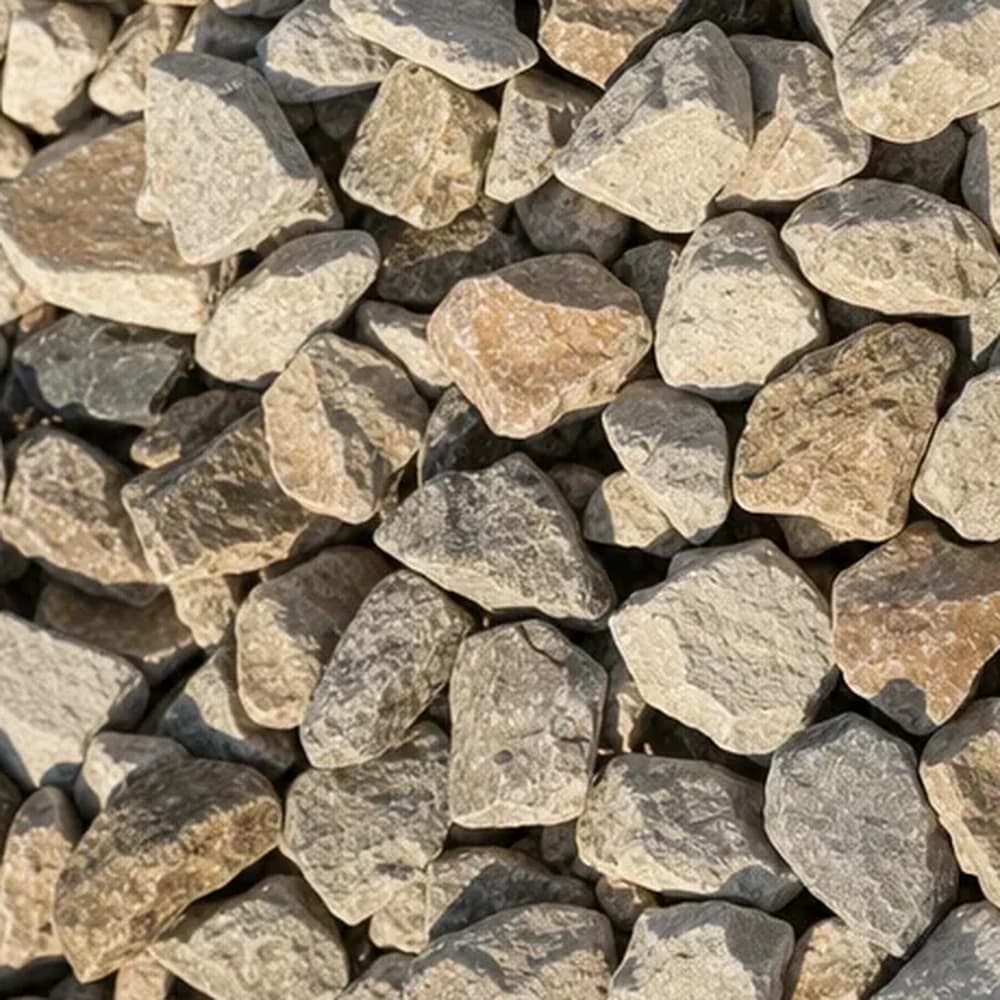
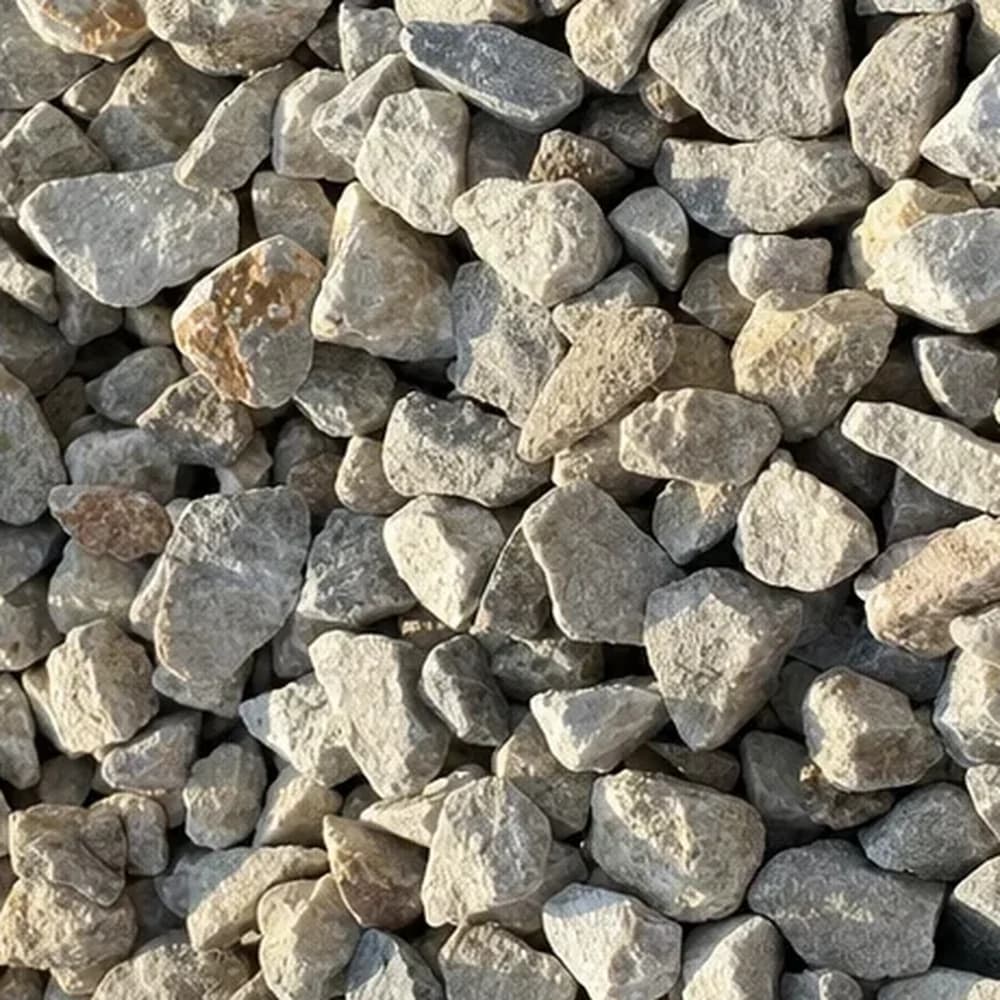
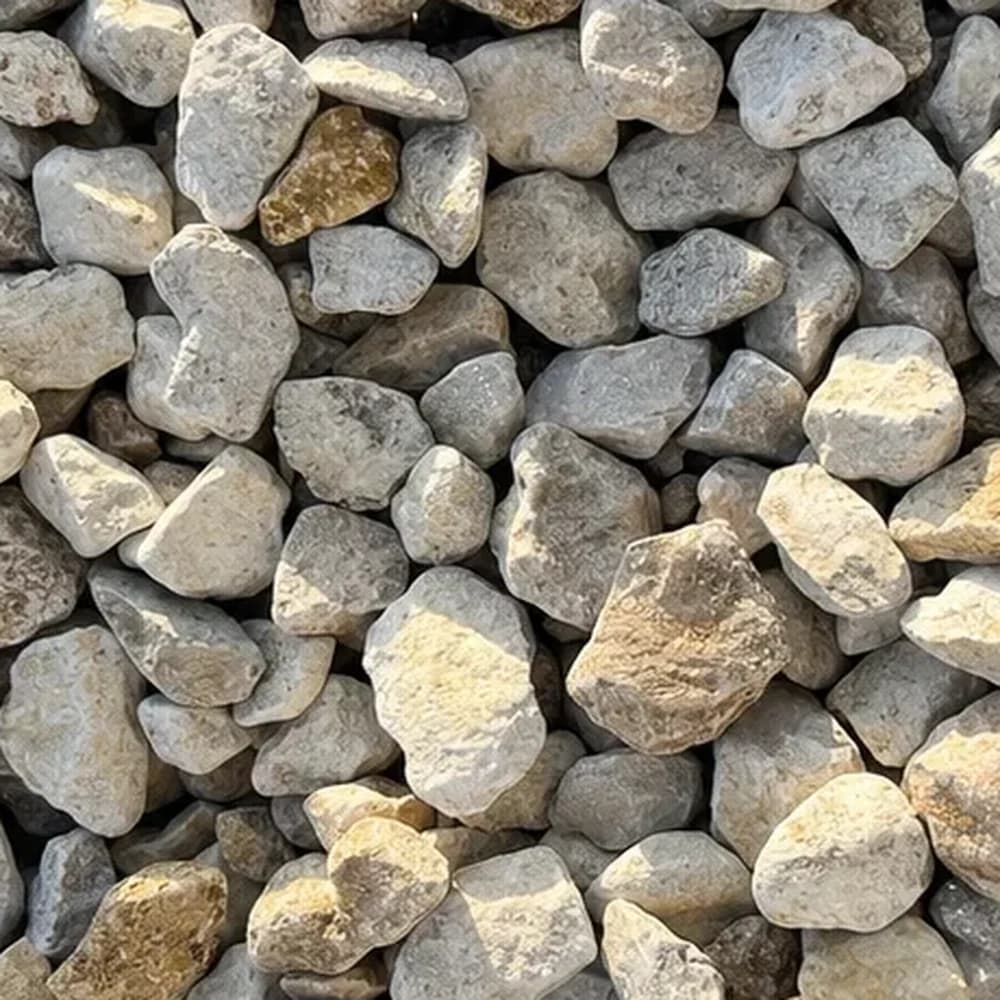
What RipRap looks like in the pile: 4 inches to 12 inches and up
- Size runs from 4 inches to 12 inches and beyond, so a load is a graded heap rather than a single size.
- Large, heavy stone by type. The weight is the working principle: moving water can carry lighter aggregate away and cannot shift this.
- The mix is useful, not a nuisance. Smaller pieces chink the gaps between the large ones and lock the face together.
- Edges and faces are irregular, which is what lets one stone sit against another instead of rolling.
- Plan the layer at least one stone thick, so where the pieces run to 12 inches the layer is around a foot deep. A single scattered course of big rock on a bank is decoration, not armor.
Where heavy stone belongs on a lake or farm property
| Place on the property | What the water is doing | How the stone gets placed |
|---|---|---|
| Lake or pond shoreline | Waves and ice working at the toe of the bank | Heaviest pieces at the waterline, layer carried below the low-water mark and up above the wave splash |
| Stream or creek bank | Current cutting the outside of a bend, worst at spring flow | Keyed in at the toe first, then stacked up the face |
| Culvert or pipe outlet | Concentrated discharge scouring a hole below the pipe | An apron spread wider than the pipe, flat enough that flow spreads instead of digging |
| Steep slope or embankment | Runoff sheeting off bare ground | Placed from the bottom up so each course supports the one above |
| Ditch or spillway lining | Fast flow scouring the channel | Continuous lining, no gaps for water to find |
Two places it does not belong: as a driveway surface and as a base under anything. Rounded loads spread and lock, this does neither. For those jobs use 3/4" Traffic Bond or Breaker Run.
Wave attack on clay bluffs, red clay banks and the spring runoff
- Along the Lake Superior shore the red clay banks erode easily, and waves, groundwater seepage and freeze-thaw work back the face from three directions at once.
- On the Green Bay and eastern lakeshore bluffs, high water and wave attack undercut clay and till, and the bank above fails in slabs once the toe is gone.
- In the Driftless Area, runoff off steep ridge ground cuts gullies and stream banks fast, and the damage arrives in single heavy storms rather than gradually.
- Across the north, the spring thaw is the real test. Meltwater cannot soak into still-frozen ground, so it runs, and it runs at volume.
- Freeze-thaw also shifts stone from behind. Ice building in saturated soil behind an armor layer pushes individual rocks out of line, which is why the layer needs weight and interlock rather than neatness.
Work at a water's edge often needs approval before stone goes in, so check the requirements that apply to your property and water body before you order.
Stone for a fire pit ring, a pole barn drip line and a culvert apron
Length times width times depth in inches divided by 12, then divided by 27 for cubic yards. For a circle, multiply the diameter by itself and then by 0.7854 to get the area.
- Example, a fire pit surround, a 3 ft wide ring of stone around a 5 ft pit, so an 11 ft outer circle: 11 x 11 x 0.7854 = 95 square feet, less the 20 square feet of pit, leaves 75 square feet. At 12 inches deep that is 75 cubic feet, divided by 27 = 2.8 cubic yards.
- Example, the drip line along both long sides of a 40 ft by 60 ft pole barn, a 2 ft wide strip at 12 inches: 2 x 60 x 2 sides = 240 square feet, so 240 cubic feet, divided by 27 = 8.9 cubic yards. The pad and the approach themselves take compacted base; the stone only handles the water coming off the roof.
- Example, aprons at both ends of a culvert under a single-car gravel driveway, each 8 ft by 6 ft at 12 inches: 96 square feet total, so 96 cubic feet, divided by 27 = 3.6 cubic yards.
This site's calculators put riprap and armor stone at about 3,100 lb per cubic yard, roughly 1.55 tons per yard, so the weights are approximate. That makes the fire pit ring 2.8 x 1.55 = about 4.3 tons, the pole barn drip line 8.9 x 1.55 = about 13.8 tons and the two culvert aprons 3.6 x 1.55 = about 5.6 tons.
Round up. Heavy stone gets placed by hand and by eye, and running short halfway along a bank means the face you already built has an unprotected end. The calculator converts these cubic yards into tons for this material.
Clearing a dump spot before the truck turns in
- Delivery is set up at checkout from your ZIP code, so work out in advance where the load can go down and how the truck gets back out.
- Drop the stone as close to the work as the ground allows. Every foot you save is a rock you are not carrying twice.
- A tarp under the pile keeps it out of the lawn and makes the last of it easier to scrape up.
- Have a pry bar, heavy gloves, a wheelbarrow rated for stone and a helper lined up. This is not a rake-and-go material.
- On soft spring ground, think about what a loaded truck does to a wet lane before you pick the spot.
Set your tonnage and a date on this page, or send the bank measurements and a photo through contact if you want the layer thickness talked through before you order.
Quickly Calculate How Much You Need
Material: RipRap
How to Measure
Measure the length and width of your project area in feet
Decide on depth in inches (2" for landscaping, 4" for driveways)
Enter the values above and we'll calculate the tonnage you need
Need help figuring out the right amount? We can help!
Call or text us at (414) 485-9466 and we'll help you calculate the right quantity for your project.
Not sure how much you need? The Rip Rap Calculator has depth guides, coverage charts and worked examples for this material.
Frequently Asked Questions About RipRap
Customer Reviews
Ordered riprap from the team and the driver was friendly, plus really careful about where he placed it.
Greg G. · Appleton, WI · Verified Buyer
Had them deliver riprap for a washout area and everything went super smooth. The driver was friendly and careful about placement, which made the whole thing easy.
Bill T. · Madison, WI · Verified Buyer
Ordered riprap from these guys and it went great. They kept me updated the whole time and delivery showed up when they said it would. Really happy with how easy it was, 5 out of 5.
Mark J. · Waukesha, WI · Verified Buyer
Ordered riprap from this company and it showed up right when I needed it. Really happy with how it all went, I'd definitely order again and recommend them.
Rob S. · Racine, WI · Verified Buyer
Had riprap delivered by the team and I'm really happy with it, fair pricing and everything showed up right when I needed it.
Paul S. · Waukesha, WI · Verified Buyer
RipRap has 5 verified customer reviews with an average rating of 4.8 out of 5.