3/4" Traffic Bond in Wisconsin: Base for Lanes That See a Plow
Also sold as Road Base
Also known as: traffic bond, base course, breaker run
A Wisconsin farm lane or parking area needs 3/4" Traffic Bond packed firmly to support traffic through deep frost cycles.
- Size: 3/4 inch minus
- Grading: Graded mix of crushed stone, gravel and binding fines
- Type: Crushed aggregate blend
From $369 for 1 ton, delivery included (larger loads cost significantly less per ton)
Free delivery included
Free delivery anywhere in Wisconsin
Pick a delivery date
Weekday delivery, earliest Oct 29
“Grabbed 3/4" Traffic Bond from this company and it was exactly what I needed. Delivery showed up on the day they promised, which made the whole project way easier. I'd definitely order again and recommend them.”
Diane I. · Verified Buyer
Get a Free Quote
Fill out the form and our sales team will get back to you within the hour.
Size and Grading
- Size
- 3/4 inch minus
- Grading
- Graded mix of crushed stone, gravel and binding fines
- Type
- Crushed aggregate blend
Frost drives at least 48 inches down under a Wisconsin footing and can sit 48 to 72 inches deep under a road by late winter, so the week a lane comes apart is never the coldest one. It is the week in March when the top few inches thaw over ground that is still locked solid, meltwater has nowhere to drain, and one loaded truck leaves ruts in a drive that looked fine in October. 3/4" Traffic Bond is the layer that keeps that from happening. Most of the orders for it start with a lane that has already done it once.
Where 3/4" Traffic Bond stops and Breaker Run starts
People mix these two up constantly. The difference is where each one sits in the build.
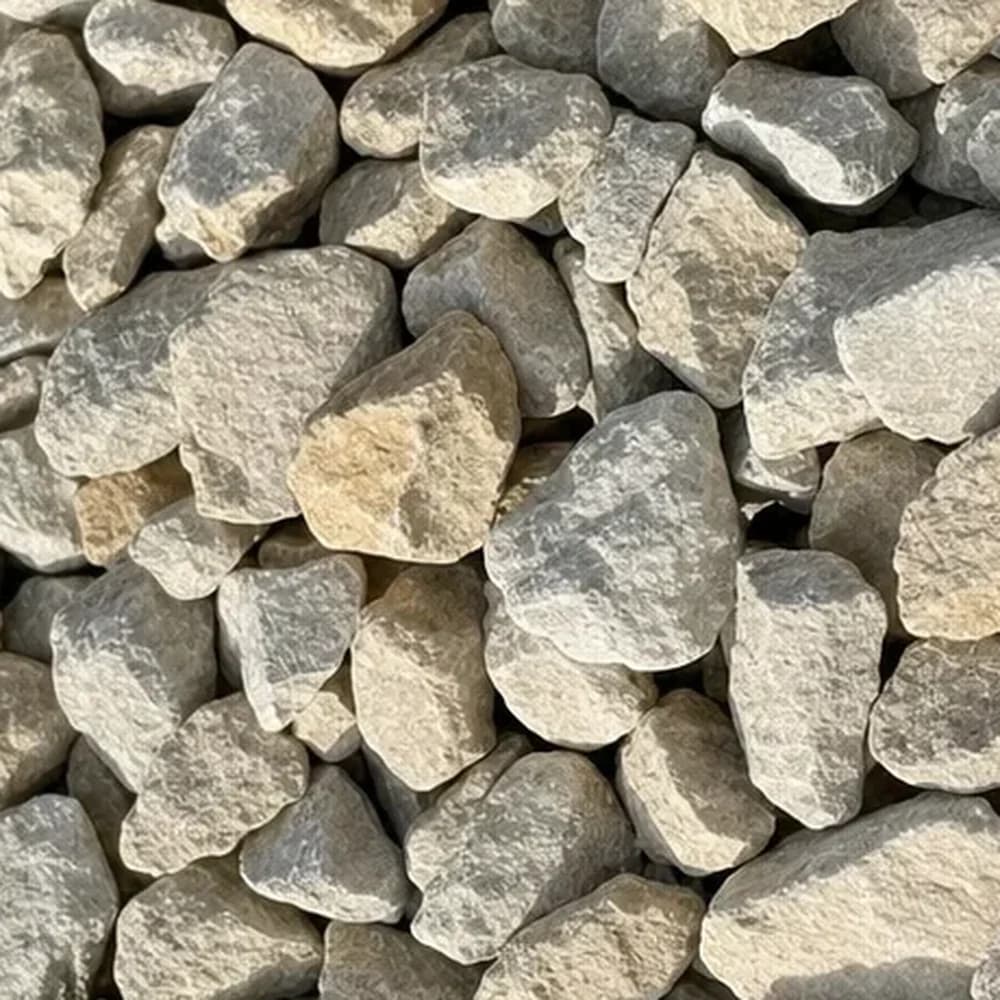
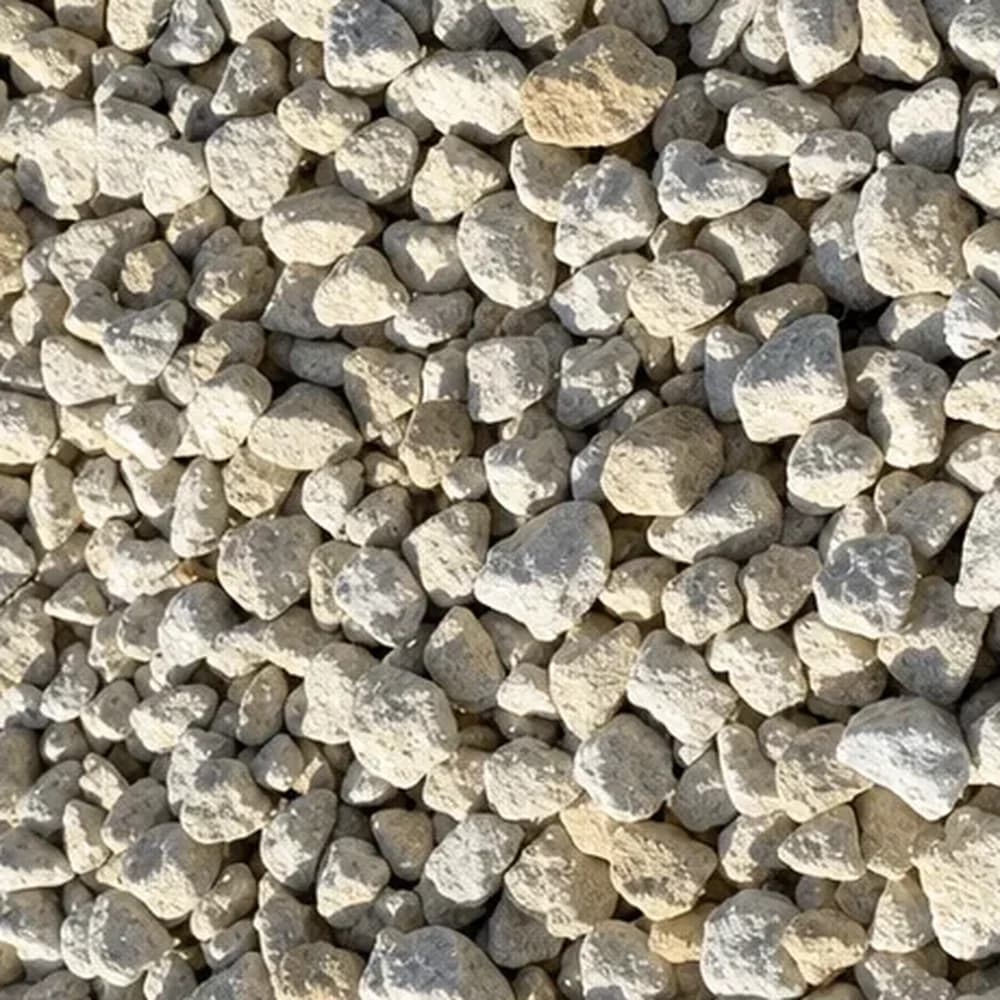
- 3/4" Traffic Bond is a 3/4 inch minus crushed aggregate blend: crushed stone, gravel and binding fines graded to work together. The coarse pieces carry the load, the fines fill the spaces, and the whole layer tightens under compaction. It sits directly under your driving surface.
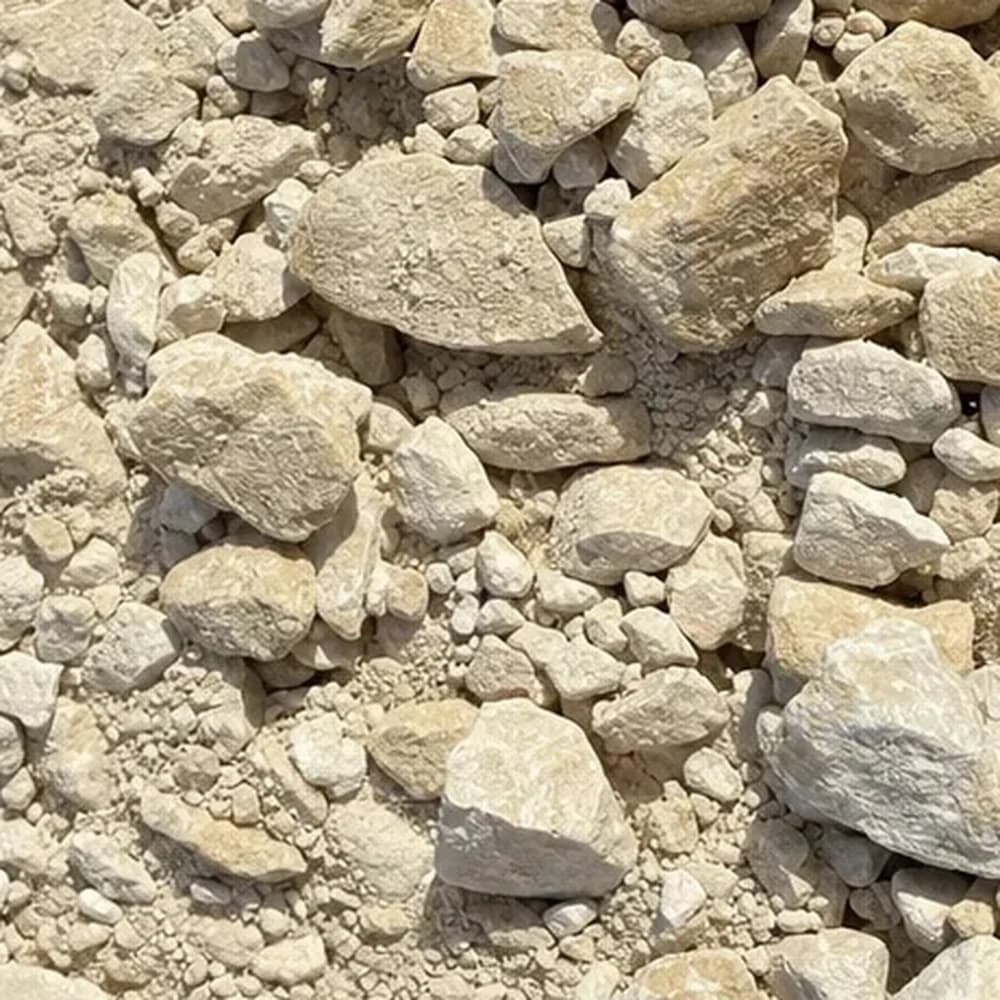
- Breaker Run is coarser material run through a primary crusher to 6 inches or less. It goes deeper still, underneath the traffic bond, and its job is correcting a soft or wet subgrade.
- 3/4" Crushed Stone, the clear stone with the fines screened out, drains beautifully and never packs. That belongs in a trench, not under tires.
If a contractor writes dense graded base, base course or road gravel on your estimate, the material they mean is the one sold here as 3/4" Traffic Bond. WisDOT specifies the dense-graded family under Section 305 and breaker run under Section 311, and those designations are simply how base material gets named in this state.
What a thin lane does in the third week of March
The thaw works down from the surface, which is the whole problem.
- Melt and rain sit in the top layer because the subsoil below is still frozen and will not take water.
- A two inch scatter of gravel has no depth to spread a wheel load, so tire pressure lands on saturated subgrade.
- Clay and silty ground softens first. Lake clays around Green Bay and the Fox Valley, and the loess silt loam in the Driftless coulees, rut well before the sandy uplands of the Central Sands do.
- Fines washed out of an old surface cannot bind stone back together, so the drive goes loose and washboards.
- Class II state highways and posted county, town and village roads carry spring weight limits while frost comes out, roughly early March into May. Ground work follows the same calendar.
Depth and compaction fix the first three. Drainage has to fix the rest.
Building over red clay, sandy outwash and Driftless silt loam
Wisconsin does not have one subgrade, it has several, and the sub-base decision changes with it.
- Lake Superior red clay plain, and the clays around Green Bay and Lake Winnebago: tight, slow to drain, wet late into spring. Plan on breaker run below the traffic bond and a crown that moves water to a ditch.
- Northwoods, Wausau country and the Chippewa Valley: stony sandy loam over dense till, with peat and muck in the low spots. Sandy ground takes a thinner build; bog edges and silty pockets need the sub-base.
- Central Sands: deep outwash drains fast once the frost leaves, so traffic bond often goes straight onto a shaped subgrade. Low ground in the old lake bed is the exception and stays soft.
- Driftless ridges and coulees: thin, stony silt loam over sandstone and dolomite. Watch for hillside seeps, because water coming out of a bank will undercut a base laid without a ditch or a cross culvert.
Shaping, compacting and the window between thaw and freeze-up
- Strip sod and topsoil first. Base placed on organic soil keeps settling.
- Shape the subgrade to the crown or cross slope you want the finished surface to hold. The base copies whatever shape you give it.
- Place in lifts and compact each one. Dumping the full depth in a single go leaves the bottom loose.
- Keep the fines damp. Bone dry material will not tighten under a plate compactor, and saturated material pumps instead of packing.
- Work after the thaw has finished and before the ground freezes. Frozen ground will not compact, so a base rushed in on a hard November morning is a base you will be repairing.
Plow blades, grader passes and what a gravel drive needs each spring
- Set plow shoes or run a rubber cutting edge so the blade rides above the surface. Steel on gravel peels the top off and stacks it in the ditch.
- Stake the edges before the first snow. Markers save the gravel and the plow both.
- Blade in spring while the surface is still damp, pulling material off the shoulders and back to the crown. Dry blading only makes dust.
- When only the wearing surface is tired, top up with a thin lift of Driveway Gravel or Screenings rather than another full base course.
- Keep ditches and culverts open. Most base failures in this state are drainage failures wearing a different hat.
Yardage for a boat pad, a 400-foot lane and a garden path
The arithmetic is the same every time: length in feet times width in feet times depth in inches divided by 12, then divided by 27 for cubic yards.
- Example, an RV or boat parking pad 12 ft by 30 ft at 6 inches: 12 x 30 x 0.5 = 180 cubic feet, divided by 27 = 6.7 cubic yards.
- Example, a long rural lane 400 ft by 10 ft at 6 inches: 400 x 10 x 0.5 = 2,000 cubic feet, divided by 27 = 74 cubic yards.
- Example, a garden path 40 ft by 3 ft at 3 inches: 40 x 3 x 0.25 = 30 cubic feet, divided by 27 = 1.1 cubic yards. A path that light is usually finished with screenings over a thin traffic bond base.
This site's calculators put crusher run and road base at about 3,000 lb per cubic yard, roughly 1.50 tons per yard, so the weights are approximate. That makes the parking pad 6.7 x 1.50 = about 10 tons, the rural lane 74 x 1.50 = about 111 tons and the garden path 1.1 x 1.50 = about 1.7 tons.
Those are compacted depths, so order to the finished layer and expect loose material to sit higher before you roll it. The material calculator converts cubic yards into tons for you, and Wisconsin Rock Supply lists this product as 3/4" Traffic Bond when you go to pick a quantity.
Set your tonnage and a date on this page, or send the measurements through our contact form if the lane bends and you want a second pair of eyes on the figures before you commit.
Quickly Calculate How Much You Need
Material: 3/4" Traffic Bond
How to Measure
Measure the length and width of your project area in feet
Decide on depth in inches (2" for landscaping, 4" for driveways)
Enter the values above and we'll calculate the tonnage you need
Need help figuring out the right amount? We can help!
Call or text us at (414) 485-9466 and we'll help you calculate the right quantity for your project.
Not sure how much you need? The Road Base Calculator has depth guides, coverage charts and worked examples for this material.
Frequently Asked Questions About 3/4" Traffic Bond
Customer Reviews
Grabbed 3/4" Traffic Bond from Wisconsin Rock Supply and ordering was no hassle at all. Delivery showed up when expected, and I'm really happy with how everything turned out.
Steve B. · Waukesha, WI · Verified Buyer
Grabbed 3/4" Traffic Bond from this company and it was exactly what I needed. Delivery showed up on the day they promised, which made the whole project way easier. I'd definitely order again and recommend them.
Diane I. · Milwaukee, WI · Verified Buyer
Got 3/4" Traffic Bond from these guys and it was exactly what I needed. Driver was friendly and careful about where he dropped it, which I really appreciated.
Amanda J. · Waukesha, WI · Verified Buyer
Had a quick time ordering from this company, and the 3/4" Traffic Bond was spot on.
Rachel N. · Racine, WI · Verified Buyer
Had them deliver 3/4" Traffic Bond and it got here right on time. Driver was friendly and took care placing it where I wanted, 5 out of 5 from me.
Mike L. · Racine, WI · Verified Buyer
3/4" Traffic Bond has 5 verified customer reviews with an average rating of 5 out of 5.