Railroad Ballast in Wisconsin: The Coarse Layer That Goes Underneath
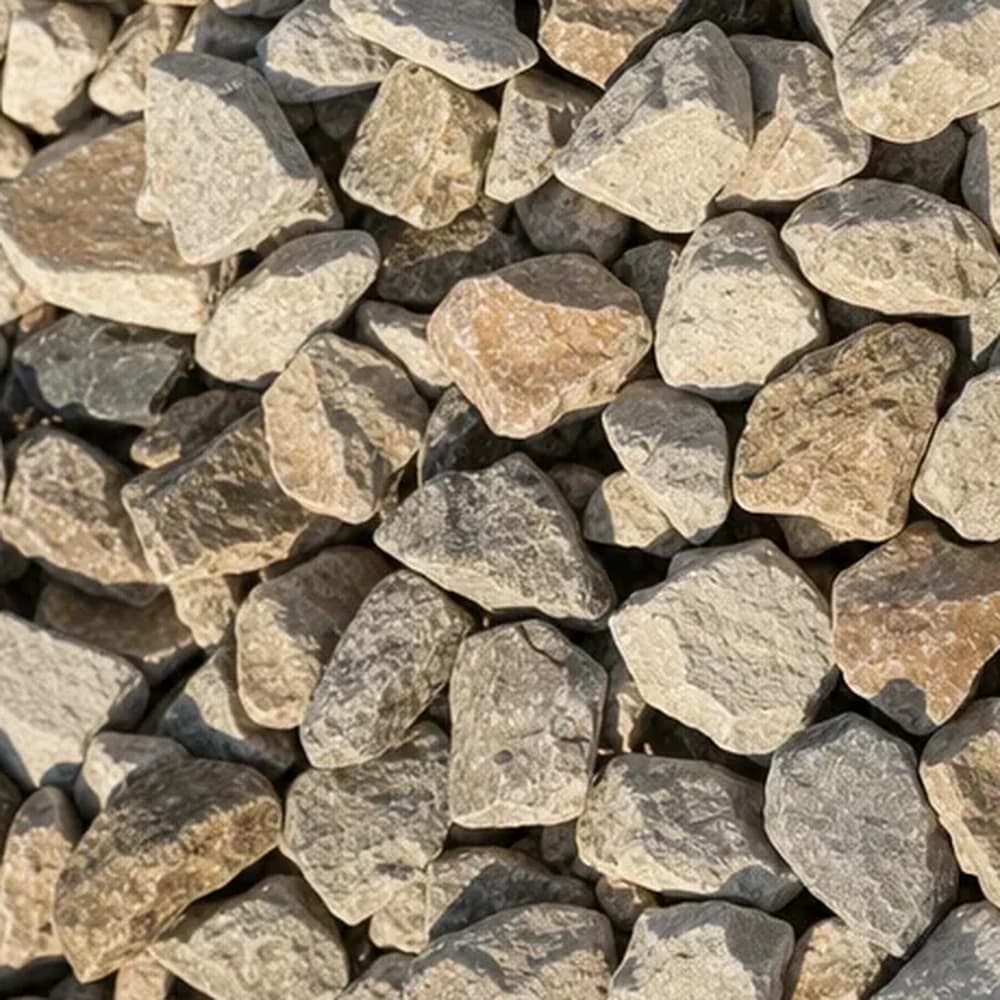
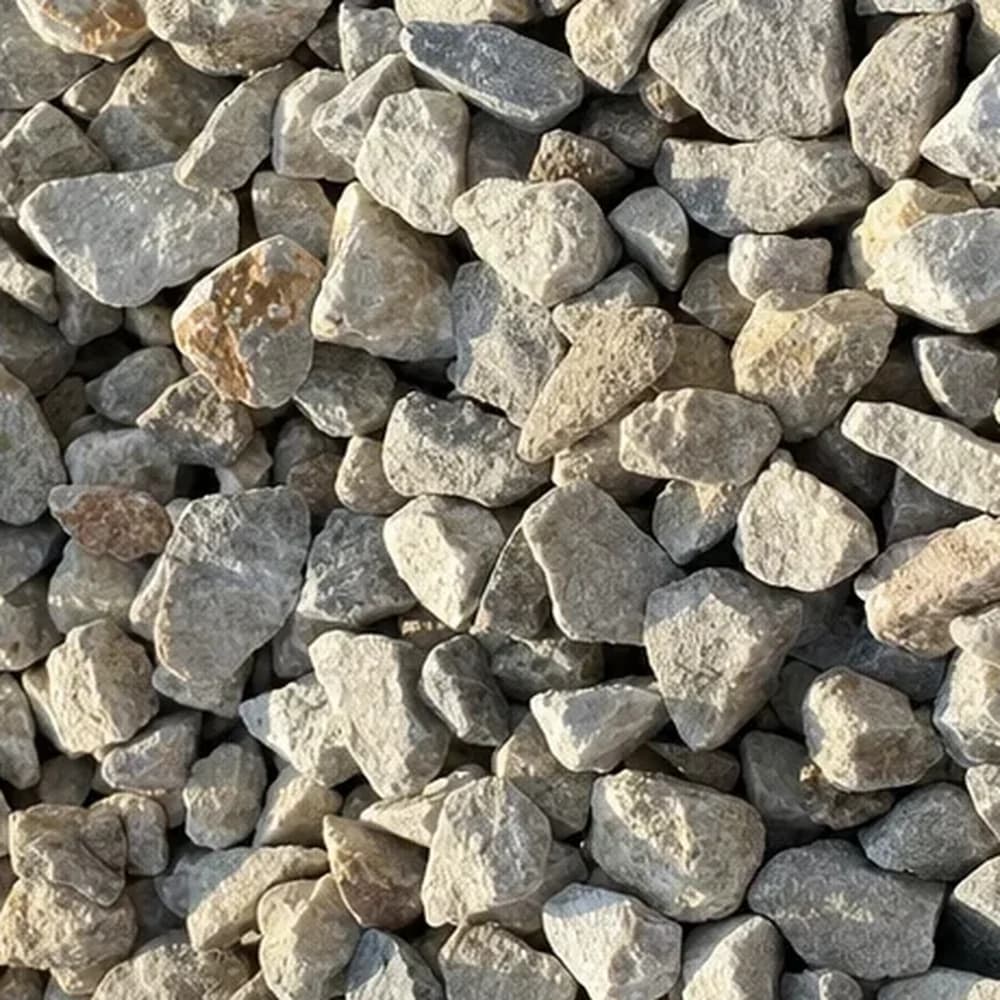
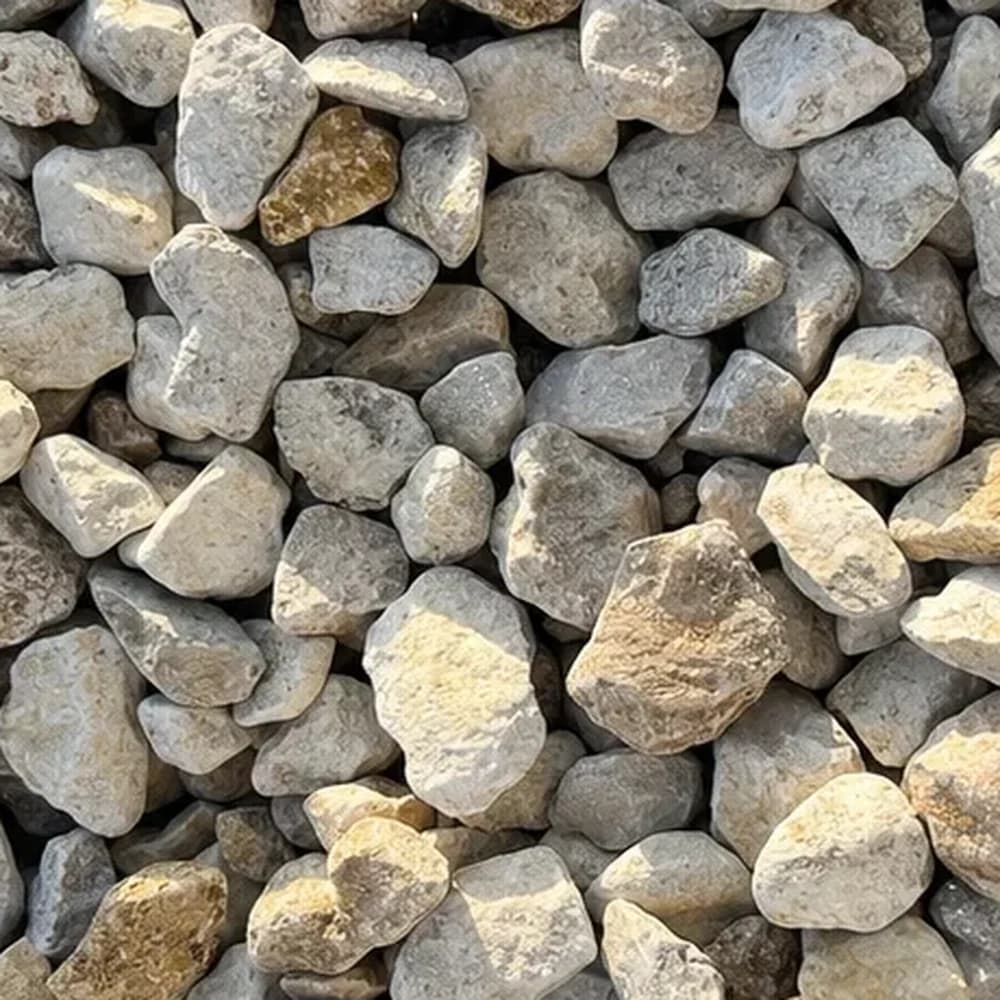
Keep Railroad Ballast in the open support course beneath Wisconsin rail work, farm lanes, or equipment areas where water needs a path through.
- Size: Roughly 1 inch to 2.5 inches
- Grading: Graded to interlock under load while draining freely
- Type: Large angular crushed stone
From $420 for 1 ton, delivery included (larger loads cost significantly less per ton)
Free delivery included
Free delivery anywhere in Wisconsin
Pick a delivery date
Weekday delivery, earliest Oct 29
“Ordered railroad ballast from Wisconsin Rock Supply and it showed up exactly when expected. Really happy with the whole thing, easy 5 out of 5.”
Kevin D. · Verified Buyer
Get a Free Quote
Fill out the form and our sales team will get back to you within the hour.
Size and Grading
- Size
- Roughly 1 inch to 2.5 inches
- Grading
- Graded to interlock under load while draining freely
- Type
- Large angular crushed stone
Ballast gets ordered to fix ground that will not hold. A corner of the yard that stays soft until June, a pad that sank the first winter, a strip along the barn that turns to soup every time the frost lets go. Railroad ballast solves that by being too big to be pushed into wet subgrade and too angular to roll apart under weight, with gaps between the pieces that water can leave through. It is the layer at the bottom of a build, and almost every disappointing load of it was bought for the top.
Size runs roughly 1 inch to 2.5 inches, graded so the pieces lock together under load while still draining freely. Large angular crushed stone, and it neither looks nor behaves like a finished surface.
Breaker Run, #4 stone and ballast do three different jobs
| Material | What it is | Where it goes |
|---|---|---|
| Breaker Run | Stone run through a primary crusher to 6 inches or less, fines retained | Sub-base over soft or clay ground, where you want the layer to knit and stay put |
| Railroad Ballast | 1 to 2.5 inch angular, graded to interlock and drain | The open, load-bearing layer where water has to keep moving through |
| #4 Crushed Stone | The nearest looking product on this site, open graded | Trench bottoms, construction entrances, heavy drainage in a narrower size band |
| RipRap | 4 inches and up, armor sized | Banks, lake edges and outlets, where moving water is the load |
| 3/4" Traffic Bond | Dense graded with fines, compacts hard | The surface course over the top of any of the above |
The practical distinction is fines. Breaker run has them and knits into a mass. Ballast has none, so it stays a stack of stones with holes in it, which is the point.
Where a load of Railroad Ballast earns its keep on a rural property
- Under an equipment or machinery pad, where the load is concentrated and the subgrade underneath was never much good.
- Under a hot tub or shed pad on a wet site, as the layer that keeps the bottom of the build out of standing water.
- Under a side-yard run or a working corner where daily traffic has churned the ground.
- In a low spot that holds meltwater every April, as a coarse layer below the fill and soil that will cap it.
- On access routes and crossings where loaded trucks or machinery repeatedly cross soft ground.
- Rail track work, which is where the grading and the name come from.
What it is not: a finish. Walking on it is unpleasant, a mower will not cross it, and a plow blade catches it. Whatever sits on top comes from a different pile.
How deep the open layer goes, and how deep it stays
- Plan on 4 to 6 inches of ballast for a light job such as a hot tub pad or a run, and more on genuinely soft ground or where machinery will sit.
- Those are loose depths and they settle. Ballast is not compacted into a slab the way a base course is. A pass or two with a plate seats the pieces and that is all it can do, since there is no binder to lock.
- On soft, wet or peaty ground, put a woven geotextile between the subgrade and the stone. Without it the stone presses into the mud and vanishes, and you will be paying for the same tonnage twice.
- Cap it. Compacted traffic bond over the ballast is what gives you something that can be graded, walked on or plowed.
- Keep the whole layer above the level water sits at, and give the water a way out. Frost under pavement can reach 48 to 72 inches by late winter here, and an open layer with no outlet is a reservoir.
- Cut the excavation to the full depth of the stone plus the cap, rather than mounding the stone on top of existing grade.
Tonnage for a soggy lawn corner, a hot tub pad and a 30-foot run
Length times width times depth in inches divided by 12, then divided by 27, gives cubic yards. This site's calculators list #4 stone and railroad ballast at about 2,900 lb per cubic yard, which is 1.45 tons per yard.
- Example, a wet lawn corner 20 ft by 25 ft taking 6 inches of ballast before it is filled and topped: 500 square feet x 0.5 = 250 cubic feet, divided by 27 = 9.3 cubic yards, times 1.45 = about 13.4 tons.
- Example, a 7 ft square hot tub pad with an 18 inch margin all round, so 10 ft by 10 ft, at 6 inches: 100 square feet x 0.5 = 50 cubic feet, divided by 27 = 1.85 cubic yards, times 1.45 = about 2.7 tons.
- Example, a side-yard run 8 ft by 30 ft at 4 inches: 240 square feet x 0.333 = 80 cubic feet, divided by 27 = 2.96 cubic yards, times 1.45 = about 4.3 tons.
Working the other way, one ton is about 0.69 cubic yards, or 18.6 cubic feet, which covers roughly 37 square feet at 6 inches and 56 square feet at 4 inches. Those are approximate, and every one of the three examples above needs a separate calculation for its cap. The stone calculator will run the tonnage if you would rather enter the measurements.
Picking a date once the frost is out of the lane
Ballast work belongs in the window between the end of the thaw and freeze-up, because you cannot shape or compact anything over frozen ground, and because placing stone on saturated subgrade wastes it. Class II state highways and posted county, town and village roads carry spring weight limits while the frost comes out, and in the northern zones those lift later than they do in the south, so a loaded truck heading down a posted town road in April may want a later date.
Before the delivery: mark the dump spot, check the truck can reverse out of it, and have the excavation cut and the fabric down. Delivery is arranged at checkout from your ZIP code. Set your tonnage and a date on this page, or send the site measurements through the contact form if you want the layer depths looked over before you commit to a quantity.
Quickly Calculate How Much You Need
Material: Railroad Ballast
How to Measure
Measure the length and width of your project area in feet
Decide on depth in inches (2" for landscaping, 4" for driveways)
Enter the values above and we'll calculate the tonnage you need
Need help figuring out the right amount? We can help!
Call or text us at (414) 485-9466 and we'll help you calculate the right quantity for your project.
Not sure how much you need? The Stone Calculator has depth guides, coverage charts and worked examples for this material.
Frequently Asked Questions About Railroad Ballast
Customer Reviews
Needed railroad ballast and Wisconsin Rock Supply made ordering no hassle, with delivery showing up right as planned.
Eric C. · Madison, WI · Verified Buyer
Had them deliver railroad ballast and everything showed up right when they said it would. Pricing was fair and the whole order felt like good value.
Nate D. · Appleton, WI · Verified Buyer
Ordered railroad ballast from Wisconsin Rock Supply and it showed up exactly when expected. Really happy with the whole thing, easy 5 out of 5.
Kevin D. · Appleton, WI · Verified Buyer
Grabbed railroad ballast from them and it was exactly what I needed. They kept me updated the whole time and communication was easy. Delivery went smooth, and I'd definitely order from them again.
Jason P. · Appleton, WI · Verified Buyer
Had railroad ballast delivered by this company, and ordering was painless from start to finish. Really happy with how it went, I'd order again and recommend them.
Nate F. · Green Bay, WI · Verified Buyer
Railroad Ballast has 5 verified customer reviews with an average rating of 5 out of 5.