River Rock in Wisconsin: Rounded Stone for Beds, Ditches and Outlets
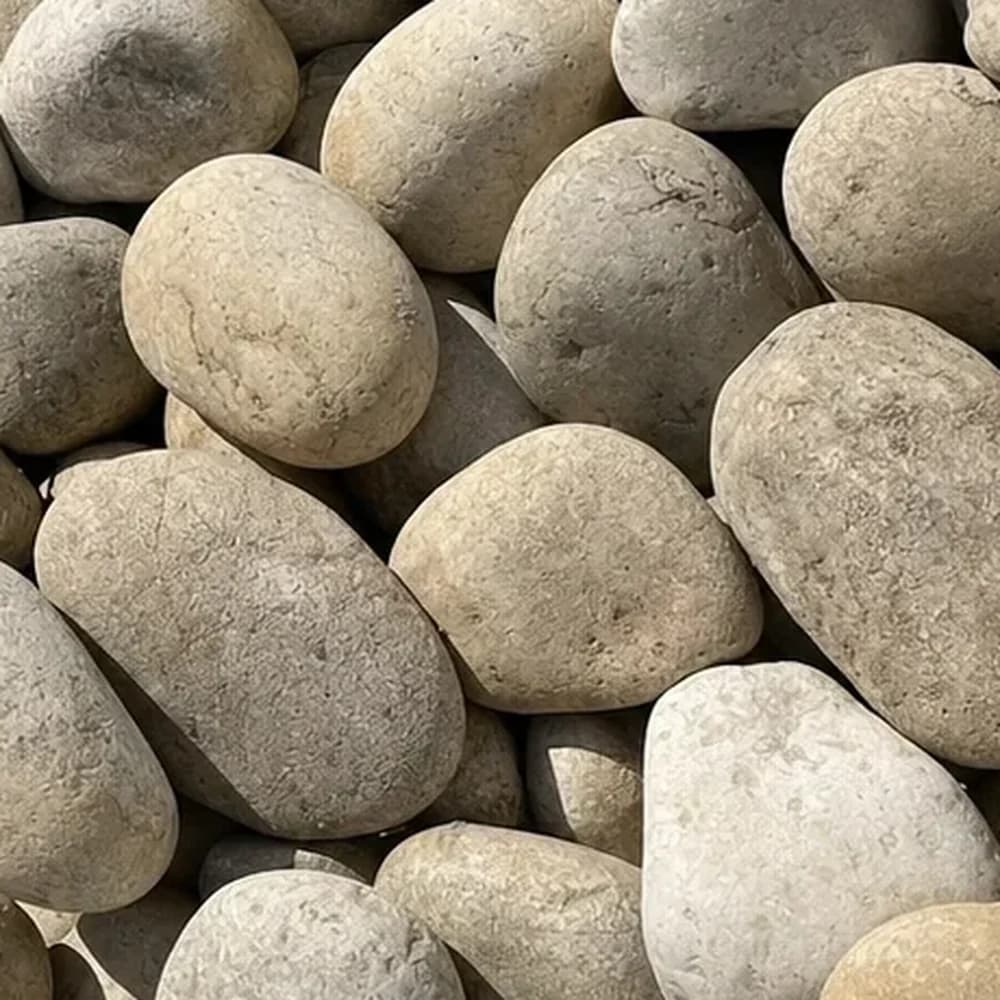
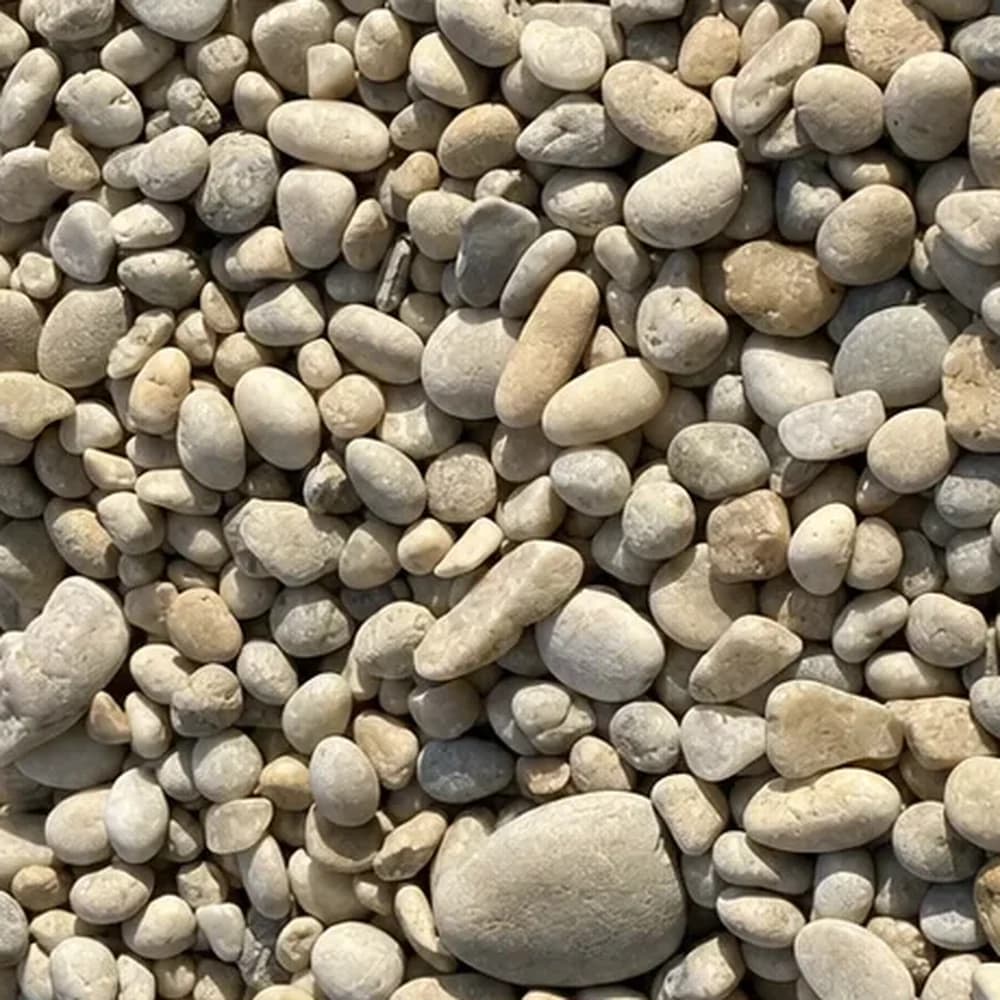
The smooth feel of River Rock suits Wisconsin planted edges and water features needing a rounded stone finish that drains.
- Size: 1 inch to 3 inches
- Type: Smooth, naturally rounded stones
- Color: Tans, grays, browns and occasional reds
From $789 for 1 ton, delivery included (larger loads cost significantly less per ton)
Free delivery included
Free delivery anywhere in Wisconsin
Pick a delivery date
Weekday delivery, earliest Oct 29
“Ordered river rock from these guys and it showed up right when they said it would. Free delivery was a nice bonus, and I'm really happy with how everything turned out.”
Gina G. · Verified Buyer
Get a Free Quote
Fill out the form and our sales team will get back to you within the hour.
Size and Grading
- Size
- 1 inch to 3 inches
- Type
- Smooth, naturally rounded stones
- Color
- Tans, grays, browns and occasional reds
Stone beds have a longer season than almost any other landscape job in this state, because nothing about them has to be compacted and nothing has to knit before the cold arrives. Base work waits for the thaw to finish and stops when the ground freezes. A River Rock bed can go in on a raw April afternoon while the frost is still leaving, or in the last week of October when the mulch crews have already packed up. That is worth knowing if your spring is already full.
The stretch of the year when rock beds actually go in
- Early spring, once the surface has drained enough to work, is the common window. You are shaping soil and laying fabric, not compacting anything, so soft ground is an inconvenience rather than a stopper.
- Late fall suits it too. The stone will not rot, fade into the beds or need replacing before spring the way a mulch layer does.
- Midsummer is fine for the work but harder on the person doing it, since a yard of stone is a lot of wheelbarrow trips in July.
- Keep the road calendar in mind when picking a date. Class II state highways and posted county, town and village roads carry spring weight limits while the frost is coming out, roughly early March into May, and that is worth a thought before a loaded truck heads down a soft town road.
- The one thing to avoid is laying stone over ground that is still holding water from the thaw. Fix the drainage first, then cover it.
Getting the bed ready before the ground closes up
- Strip the sod and dig the bed down so the finished stone sits level with the lawn, not proud of it. Stone heaped above grade migrates.
- Shape the fall. A dry creek or a downspout run needs a continuous grade to somewhere water is allowed to go.
- Put a proper edge in. Steel, aluminum or a mortared stone border all work; plastic roll edging lifts out of the ground over a Wisconsin winter and takes the line with it.
- Lay a woven landscape fabric underneath, overlapped at the seams and pinned. Under stone the fabric earns its place, because you will not be renewing the layer every year the way you would with mulch.
- On lake-plain clay or in a low spot, sort out where the water leaves before you cover the ground. Stone hides a wet spot, it does not dry it out.
Culvert outlets, ditch lines and the River Rock beds that replace mulch
Rounded 1 to 3 inch stone in tans, grays, browns and the occasional red suits the informal edges most properties around here actually have.
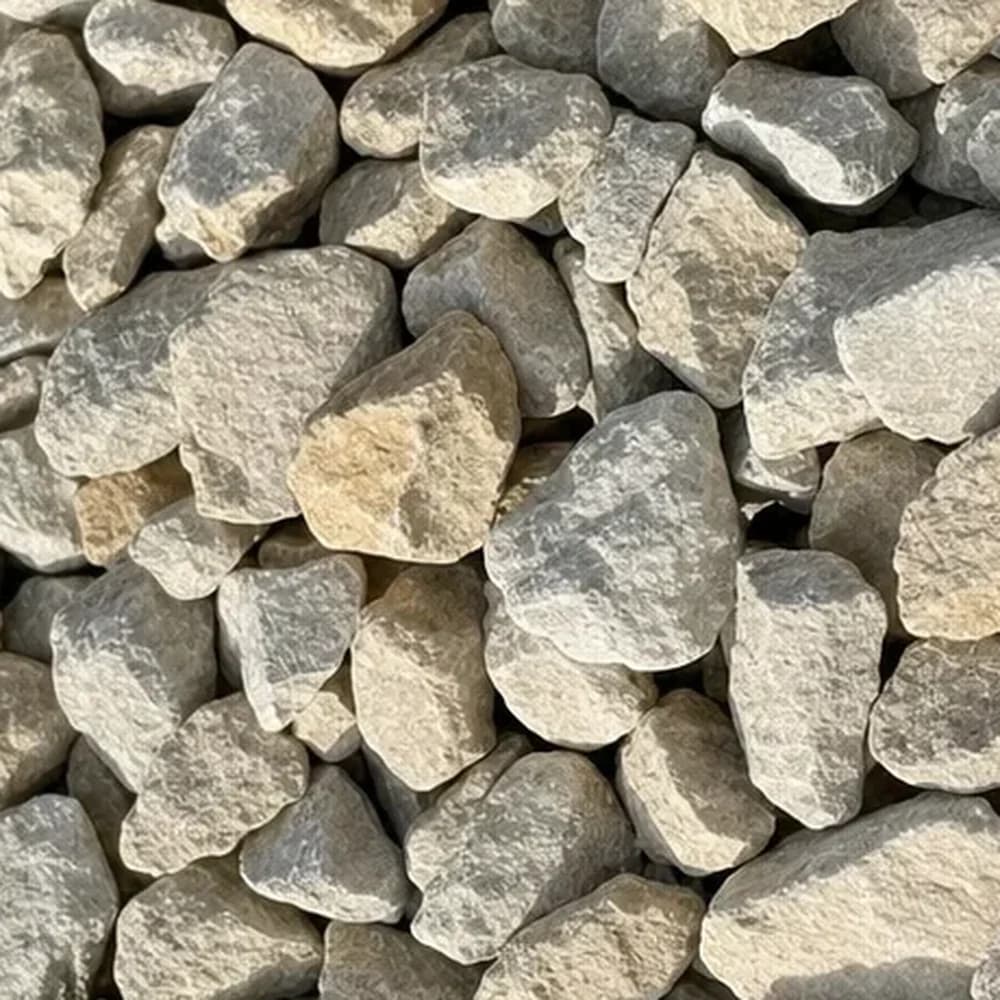
- Culvert outlets and ditch lines. Rounded stone lets water through and covers bare soil where flow is moderate. Where discharge is genuinely scouring a hole below a pipe, that is armor work and belongs to RipRap instead.
- Rock gardens and low-water beds. Stone holds a defined shape between plantings, does not blow around, and keeps its color through a winter that turns bark mulch gray.
- Dry creek beds and downspout runs. A stone channel takes roof water away from a foundation and stops splash cutting trenches in a bed.
- Foundation and shed surrounds. A stone apron around a shed or garage keeps roof drip from splashing siding and mud. The pad itself is a different material: build that from compacted 3/4" Traffic Bond and keep the stone for the skirt around it.
- Bed edges and borders where mowers clip and mulch ends up on the driveway.
Yardage for a ditch line, a rock garden and a shed apron
Square footage times depth in inches divided by 12, then divided by 27 for cubic yards.
- Example, a ditch line below a culvert, 18 ft long and 5 ft wide at 4 inches: 90 square feet x 0.333 = 30 cubic feet, divided by 27 = 1.1 cubic yards.
- Example, a rock garden bed 22 ft by 9 ft at 3 inches: 198 square feet x 0.25 = 49.5 cubic feet, divided by 27 = 1.8 cubic yards.
- Example, an 18 inch apron around a 12 ft by 16 ft shed: the outer rectangle is 15 x 19 = 285 square feet, less the 192 square feet of shed, leaves 93 square feet. At 3 inches that is 23.3 cubic feet, divided by 27 = 0.9 cubic yards.
This site's calculators put river rock at 1 to 3 inches at about 2,700 lb per cubic yard, roughly 1.35 tons per yard, so the weights are approximate. That makes the ditch line 1.1 x 1.35 = about 1.5 tons, the rock garden bed 1.8 x 1.35 = about 2.4 tons and the shed apron 0.9 x 1.35 = about 1.2 tons.
As a rule of thumb, one cubic yard covers about 162 square feet at 2 inches and 108 square feet at 3 inches. Two inches is thin enough that fabric shows through in places; three is the depth most beds end up at. The calculator turns cubic yards into tons for this stone.
Keeping rounded stone out of the lawn through a Northwoods winter
- Rake stray stones back before the first mow of the year, not after. A mower blade will throw one a long way.
- Check the bed edge after the thaw. Frost lifts edging, and a lifted edge is where stone escapes.
- Blow or rake leaves off in the fall rather than letting them break down in the bed, because the silt they leave behind is what eventually seeds weeds in the gaps.
- Every few years a hose or a pressure washer on a wide setting brings the color back after road grit and winter salt spray.
- Where a plow throws snow, expect stone and gravel to end up mixed at the edges each spring and plan on a tidy-up rather than a repair.
Work out your yardage, then set a quantity and a date on this page. Delivery is arranged at checkout from your ZIP code, so pick a drop spot the truck can reach and reverse out of before you order.
Quickly Calculate How Much You Need
Material: River Rock
How to Measure
Measure the length and width of your project area in feet
Decide on depth in inches (2" for landscaping, 4" for driveways)
Enter the values above and we'll calculate the tonnage you need
Need help figuring out the right amount? We can help!
Call or text us at (414) 485-9466 and we'll help you calculate the right quantity for your project.
Not sure how much you need? The River Rock Calculator has depth guides, coverage charts and worked examples for this material.
Frequently Asked Questions About River Rock
Customer Reviews
Grabbed some river rock from these guys and it looks great. Delivery showed up on the day they promised, which I really appreciated.
Stephanie M. · Milwaukee, WI · Verified Buyer
Grabbed river rock from these guys and it looks great in my yard. Delivery got here on time, and I'd definitely order again.
Rob C. · Madison, WI · Verified Buyer
Ordered river rock from Wisconsin Rock Supply and it showed up right on time, looks great, and I'd definitely order again and recommend them.
Wendy T. · Green Bay, WI · Verified Buyer
Ordered river rock from the team and the ordering was smooth.
Tony V. · Waukesha, WI · Verified Buyer
Ordered river rock from these guys and it showed up right when they said it would. Free delivery was a nice bonus, and I'm really happy with how everything turned out.
Gina G. · Waukesha, WI · Verified Buyer
River Rock has 5 verified customer reviews with an average rating of 4.8 out of 5.