Top Soil in Wisconsin: Screened Black Dirt for Lawns, Beds and Repairs
Once settled over a prepared site, Top Soil gives Wisconsin lawn and garden work a uniform surface that is easy to shape for planting.
- Size: Screened; free of rocks, debris and large clumps
- Grading: Balanced sand, silt and clay
From $375 for 1 ton, delivery included (larger loads cost significantly less per ton)
Free delivery included
Free delivery anywhere in Wisconsin
Pick a delivery date
Weekday delivery, earliest Oct 29
“I spread this over a reseeded patch of lawn. It was easy to rake out and gave the new grass a good start. It was a practical choice for the job at my Milwaukee, WI home.”
Avery K. · Verified Buyer
Get a Free Quote
Fill out the form and our sales team will get back to you within the hour.
Size and Grading
- Size
- Screened; free of rocks, debris and large clumps
- Grading
- Balanced sand, silt and clay
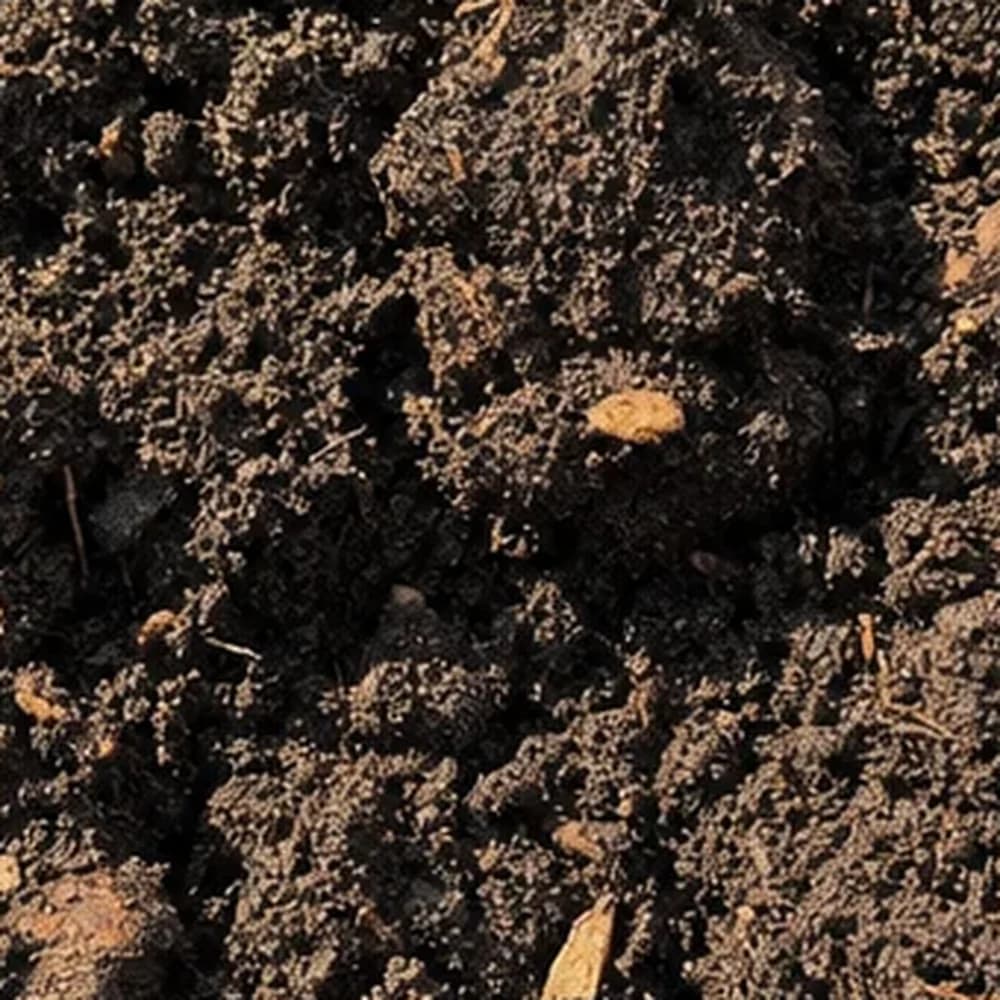
Tip a load of screened soil onto the driveway on a June morning and you can read it with your hands before you ever pick up a rake. It should be dark, fine and crumbly, breaking apart between your fingers instead of holding a fist shape, with no root wads, no sod chunks and no field stone rolling out of the pile. That texture is the whole point of pulverized top soil, and it is why it spreads to an even skin over a yard that winter left uneven.
What a load of pulverized black dirt looks like on the driveway
Most Wisconsin buyers call it black dirt, and yards sell it pulverized so it spreads fine.
- Screened, so rocks, root pieces and large clumps have been taken out before it reaches you.
- Balanced sand, silt and clay, which is why it holds moisture without setting like a lake-clay subsoil.
- Damp is normal, especially in spring. Damp soil is heavier, clumps on a shovel and flattens out fine once it is raked and watered.
- It is a finishing material. It does not carry weight, it does not pack, and nothing structural should sit on it.
Top Soil, garden mix and fill dirt each do a different job
Three soil products, three places in the build, and ordering the wrong one is the most common mistake on this part of the catalogue.
| Product | What it is for | Where it goes in the profile |
|---|---|---|
| Top Soil | Seeding, sod, lawn repair, shaping the final surface | The top layer, after grade and drainage are settled |
| Garden Soil | Raised beds and planting areas, sold locally as garden mix | Inside bed frames and planting holes |
| Fill Dirt | Raising grade, filling low ground, backfill | Underneath, before any soil goes on |
The short version: use fill dirt to change the shape of the ground, garden mix to grow vegetables in a frame, and screened top soil for the last few inches where grass and roots actually live. Pay for a deep load of screened soil to fill a hole and you are paying finish-layer money for backfill.
Where screened soil earns its place on till, lake clay and outwash
Wisconsin ground varies enormously from one property line to the next, so the reason for ordering soil varies with it.
- On slow-draining lake clay around Green Bay, Lake Winnebago and the Fox Valley, a layer of screened soil gives seed something friable to root into instead of a surface that crusts and sheds water.
- On Central Sands outwash, soil holds moisture in ground that otherwise dries out within days of a rain.
- On Driftless silt loam, a spring storm running off a ridge can take a seedbed with it, so soil goes down with the cover and the erosion control planned at the same time.
- Anywhere in the state, frost heave and a hard winter leave dips, plow scars and stump craters that need filling and leveling before anything green will look even.
One caution that holds everywhere: do not use soil to fix a low spot that is low because water collects there. Sort the drainage or the grade first, with fill dirt if you need bulk, and keep soil for the finish.
Depth for a new lawn, a dog run and the ring around a hot tub pad
Length times width times depth in inches divided by 12, then divided by 27 gives cubic yards.
- Example, a new lawn area of 2,400 square feet at 4 inches: 2,400 x 0.333 = 800 cubic feet, divided by 27 = 29.6 cubic yards.
- Example, a side-yard dog run 6 ft by 40 ft at 3 inches: 240 x 0.25 = 60 cubic feet, divided by 27 = 2.2 cubic yards. Worth saying plainly: a run that gets used every day in a Wisconsin spring turns to mud, so soil there only makes sense if you are seeding it and resting it. A gravel or screenings surface is the usual answer for a working run.
- Example, the disturbed ring around a hot tub pad, 3 ft wide on all sides of an 8 ft square pad, at 4 inches: 14 x 14 = 196 square feet, less the 64 square feet of pad, leaves 132 square feet. 132 x 0.333 = 44 cubic feet, divided by 27 = 1.6 cubic yards. The pad itself gets compacted base, not soil.
This site's calculators put screened topsoil at about 2,200 lb per cubic yard, roughly 1.10 tons per yard, so the weights are approximate. That makes the new lawn 29.6 x 1.10 = about 32.6 tons, the dog run 2.2 x 1.10 = about 2.4 tons and the hot tub ring 1.6 x 1.10 = about 1.8 tons.
For reference, a single cubic yard is 27 cubic feet, which covers about 162 square feet at 2 inches, 108 at 3 inches and 81 at 4 inches. The soil calculator will run the conversion to tons if you would rather order by weight.
Getting the yard ready before the truck backs in
- Pick the dump spot first. Delivery is arranged at checkout from your ZIP code, and the truck needs clear access and room to back out.
- Soil on a driveway is easier to move but tracks; soil on turf is easier to load into a wheelbarrow but will kill the grass under it. Sheets of plywood or a tarp under the pile save you both problems.
- Have the wheelbarrows, a landscape rake and a leaf rake ready before it lands rather than after.
- Move a spring load the same week. Wet screened soil left in a heap settles into something much harder to shovel.
- Spread, rake, water, then walk it and look across the surface at a low angle. Dips show up in the light long before they show up in the lawn.
Choose a quantity and a date on this page once you have your yardage, or send a sketch of the area through the contact page and we will work the depths through with you.
Quickly Calculate How Much You Need
Material: Top Soil
How to Measure
Measure the length and width of your project area in feet
Decide on depth in inches (2" for landscaping, 4" for driveways)
Enter the values above and we'll calculate the tonnage you need
Need help figuring out the right amount? We can help!
Call or text us at (414) 485-9466 and we'll help you calculate the right quantity for your project.
Not sure how much you need? The Topsoil Calculator has depth guides, coverage charts and worked examples for this material.
Frequently Asked Questions About Top Soil
Customer Reviews
Got top soil from these guys and the driver was friendly and careful about where he placed it.
Kim V. · Appleton, WI · Verified Buyer
Got top soil from this company and ordering was painless. I'm really happy with it and would definitely order again.
Christine P. · Waukesha, WI · Verified Buyer
Good start for new grass
I spread this over a reseeded patch of lawn. It was easy to rake out and gave the new grass a good start. It was a practical choice for the job at my Milwaukee, WI home.
Avery K. · Racine, WI · Verified Buyer
Picked up some top soil from these guys and it was great quality. Price was fair too, felt like a good value for what I got.
Hank G. · Appleton, WI · Verified Buyer
Grabbed top soil from Wisconsin Rock Supply and it was exactly what I needed. Pricing was fair, delivery was smooth, and I'd definitely order again.
Megan P. · Racine, WI · Verified Buyer
Top Soil has 5 verified customer reviews with an average rating of 4.8 out of 5.