Topsoil Calculator: Black Dirt by the Yard for Lawn Work
Enter your project dimensions
The decision that sets the size of a topsoil order is not how big the lawn is. It is what the soil has to do: build a rooting layer, or dress one that already exists. A thousand square feet at four inches is twelve yards and a two-day job with a machine. The same thousand feet at half an inch is a yard and a half and an evening with a rake. Same lawn, same tape, eight times the soil. Settle that question first and the topsoil calculator handles the rest.
How much lawn is the topsoil calculator actually covering?
Measure the ground that gets soil, not the parcel. Drives, patios, beds and the shaded strip you have given up on all come out of the total.
- Break the lawn into rectangles and use multiple areas, up to five at once.
- A round bed or a ring cut into the turf goes in as a diameter.
- On a slope, run the tape along the ground rather than reading a flat distance off a plan.
- Leave out anything you are not covering. Overstating area is the commonest way a lawn order doubles.
How deep before grass roots into it instead of through it?
| Job | Depth to enter |
|---|---|
| Topdressing established turf | 0.25 to 0.5 in, raked so blades still show |
| Preparing for overseeding | 0.5 to 1 in |
| New lawn, seed or sod | 4 to 6 in over a loosened subgrade |
| Flower bed, blended into what is below | 6 in |
| Filling low spots before seeding | measured as its own layer |
Loosen the subgrade an inch or two before the soil goes on. Four inches of black dirt spread over clay that has been sealed by a skid steer holds water like a tray, and in this state that tray freezes. Grade away from the house as well, roughly six inches of fall across the first ten feet. Settle the soil with water rather than by stamping it: in properly settled topsoil a boot print goes in about half an inch.
Why does soil sold by the yard come back as tons?
A cubic yard of pulverized topsoil runs about 2,200 pounds, which is 1.10 tons, and that is the published weight for the material as sold. After it soaks, that same yard weighs more. The yardage never moves, because rain changes the weight of soil and not the space it fills. The tonnage is there so you know what is coming off the truck and what the wheelbarrow is going to feel like.
Coverage, one yard at a time: about 648 square feet at a half-inch topdressing, 162 at two inches, 81 at four and 54 at six. Garden mix at roughly 2,000 pounds a yard and fill dirt at about 2,400 sit either side of topsoil on the weight list, so the tonnage moves when you change the material even though the yardage does not.
To check the panel by hand: square footage, times the depth in inches divided by twelve, divided by twenty-seven for yards, times 1.1 for tons.
Should the five percent be ticked for a seedbed?
The form has one optional allowance, a tick box adding five percent for compaction and spillage, and it stays on until you untick it. Nothing else is added behind the scenes.
- Tick it for a new lawn. A ripped, rough seedbed swallows more than a level one.
- Untick it for a light topdressing, where a surplus half yard has nowhere useful to go.
- Round up on top of it for edges, low corners and the strip along the drive that always ends up thin.
- A load that runs out with a strip still bare is a seeding date missed, not a delivery rescheduled.
Thirty-five yards under a new back lawn, eight over the front
Hypothetical jobs, worked through.
The back lawn is 2,860 square feet going in fresh at 4 inches. Four inches is a third of a foot, so the layer is 953.3 cubic feet. That comes to 35.3 cubic yards, and at 1.10 tons to the yard it is 38.8 tons on the truck. Tick the five percent and it reads 37.1 yards. Call it 37 and spread the last of it along the edges.
The front and side lawns together are about 5,000 square feet and want a half-inch dressing after a winter of frost heave. Half an inch is 0.0417 of a foot, so that is 208 cubic feet, or 7.7 cubic yards and 8.5 tons. Eight yards of soil covering 5,000 square feet looks like almost nothing in the driveway, which is the point of a topdressing.
Black dirt, garden mix or fill: which one goes in the box?
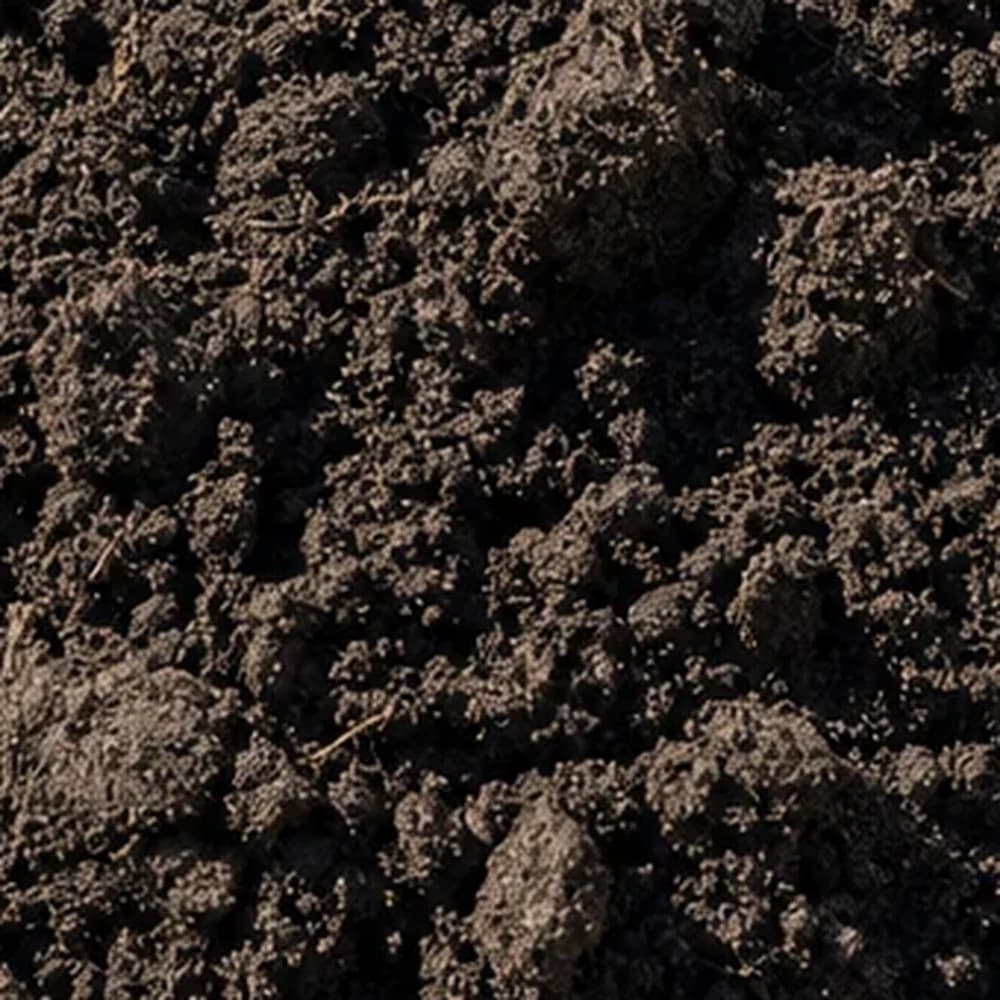
- Pulverized topsoil, the black dirt in the Top Soil listing, is natural soil screened clean of stones, roots and clods. It is the lawn and finish-grade material, and this page sizes it.
- Garden mix is topsoil blended with compost for planting, and beds and boxes are sized on the soil calculator.
- Fill dirt is subsoil for raising grade, and the dirt calculator handles it.
Judge a delivered load by hand. Screened material should look dark, crumble when you rub it, and smell earthy. Squeeze a moist handful: it should hold a loose ball and break apart under a finger. Material that ribbons out smooth is heavy clay, material that will not hold at all is mostly sand, and gray soil or a sour smell means it has sat wet and airless. Photograph anything that looks off before it is spread.
Getting it down between the thaw and the seed date
Spring seeding waits for the thaw, and on clay in the east and silt loam in the Driftless coulees that is later than the surface suggests. Late summer into early fall is the other good window, with warm soil and cooler air. Take delivery in the week you plan to spread: a pile left out in the rain weighs a third more per shovel and smears rather than rakes.
Set the yardage and a date on the product page and check out. Delivery is arranged at checkout by ZIP code, and the truck needs firm ground with clear access to tip on, off the new seedbed. Odd-shaped lawns can go through the contact page with your measurements, and access questions are answered on the delivery page.
Common questions
The low end of the yard has to come up before any seed goes down. Which calculation comes first?
The structural one. Work out the fill to four to six inches below the finished height you want on the dirt calculator, then come back here and run the remaining four to six inches as the rooting layer. Two materials on two weight rows should never share one entry, and buying black dirt to do a fill job is the most expensive mistake on this page.
The lawn runs out into brush with no edge to measure to. Where do I stop the tape?
Wherever you intend to stop raking. Walk the line you will actually mow, flag it, and measure rectangles inside those flags. Soil that goes past the mowing line grows weeds, not grass, so a conservative area is the right one here rather than a generous one.
Only the strip where the snow pile sat is bare. How do I size that?
Measure the strip on its own and enter the depth it is down by, not the depth of a new lawn. A plow windrow strip is usually an inch or two low and compacted, so scarify it before the soil goes on. Entering the whole lawn to fix one strip would put the order out by a factor of ten.
Is it worse to be short on a seedbed than on a topdressing?
Much worse. A dressing that runs out just leaves a strip for next time, and the grass covers the difference within a month. A seedbed that runs out leaves a thin patch that grows differently for years, and the rest of the lawn is already seeded by the time a second load arrives. Round up on new lawns.
The subgrade is rough after ripping. Does that throw the estimate off?
It costs you a little more than the flat calculation suggests, because loose ground swallows soil into its hollows before any depth registers on top. That is what the five percent is for, and on a badly broken surface it is worth going a shade further than that. The arithmetic itself is exact; the ground is what is uneven.
Related calculators
Lawn math done? Soil's on us to deliver.
Screened topsoil by the cubic yard, free delivery across Wisconsin.