Soil Calculator for Raised Boxes, Borders and Planters
Enter your project dimensions
Three soil materials sell here and only one of them grows anything well. Fill dirt holds a grade and is sized on the dirt calculator. Pulverized topsoil, what most buyers around here call black dirt, goes under seed and sod and belongs on the topsoil calculator. This soil calculator is for the planting layer: garden mix, the blend of topsoil and compost that goes into raised boxes, borders and planters. Get the material right first, because the depth table below only makes sense once you know which of the three you are ordering.
How deep a box, a border and a bed that only needs lifting go
| What you are filling | Depth to enter | What goes in |
|---|---|---|
| Empty raised box, filled from scratch | 12 in | Garden Soil, sold here as garden mix |
| Box taller than 18 in | lower third in fill, then 8 to 12 in on top | Fill Dirt, then garden mix |
| New bed at ground level | 6 in, blended into what is under it | Garden mix |
| Tired bed being improved | 2 to 3 in worked through the top 6 in | Garden mix |
| Final grade before seed | its own calculation | Top Soil |
Checklist before anything goes in the form:
- Measure the inside of the frame, not the boards.
- Measure the full depth rather than estimating it. A twelve-inch box is deeper than it looks from above.
- A deep box gets two entries, because the bottom layer and the top layer are different materials.
- Wait for the box itself to thaw. A raised bed is frozen through long after the lawn beside it has softened, and soil tipped onto frozen ground sits in a cold lump for weeks.
Five boxes in one pass through the soil calculator
- Shape. Rectangle, circle, or multiple areas, up to five totaled into one figure. A half barrel goes in as a diameter.
- Size. Length and width in feet, or the diameter in feet. A box measured in inches converts first: 44 inches is 3.67 feet.
- Depth. Inches, from 0.25 to 24, which covers everything short of a very deep planter.
- Material. The select list. Garden mix, screened topsoil and fill dirt each carry their own weight.
- Extra. An optional five percent tick box for compaction and spillage, on unless you untick it.
- Result. Cubic yards, tons and cubic feet, and the quote can be emailed to you.
Four 4-by-8 boxes at eleven inches, and a tired border reworked
Hypothetical jobs, with the arithmetic left in.
Four boxes, each 4 by 8 feet inside the frame, filled to 11 inches. Each box covers 32 square feet, and eleven inches is 0.917 of a foot, so each holds 29.3 cubic feet. Four of them make 117.3 cubic feet, which is 4.35 cubic yards. Garden mix weighs an even ton to the yard, so that is 4.35 tons. Enter all four under multiple areas and the tool adds them for you.
The border is 30 feet long and 4 feet wide and does not need emptying, only lifting. Three inches of garden mix worked through the top six is 120 square feet at a quarter of a foot, which is 30 cubic feet, or 1.11 cubic yards and the same in tons. That is less than a third of what stripping and refilling the same border would have taken.
A yard of garden mix is an even ton, and that tells you what is in it
Garden mix runs about 2,000 pounds to the cubic yard, exactly one ton. Screened topsoil is heavier at roughly 2,200 pounds, 1.10 tons, and fill dirt heavier again at about 2,400, or 1.20 tons. The sequence is the compost: the more organic matter in a blend, the lighter the yard and the more air there is in it for roots.
Volume does not move when the material does. Switch from garden mix to fill on the select list and the cubic yards stay put while the tonnage climbs by a fifth. Soil sells by the yard, so the yardage is the number to order against and the tonnage is there to tell you what is arriving on the truck.
Checking it by hand takes one line of arithmetic: square footage, times the depth in inches divided by twelve, divided by twenty-seven.
Garden mix in the planting layer, black dirt on the lawn, fill under both
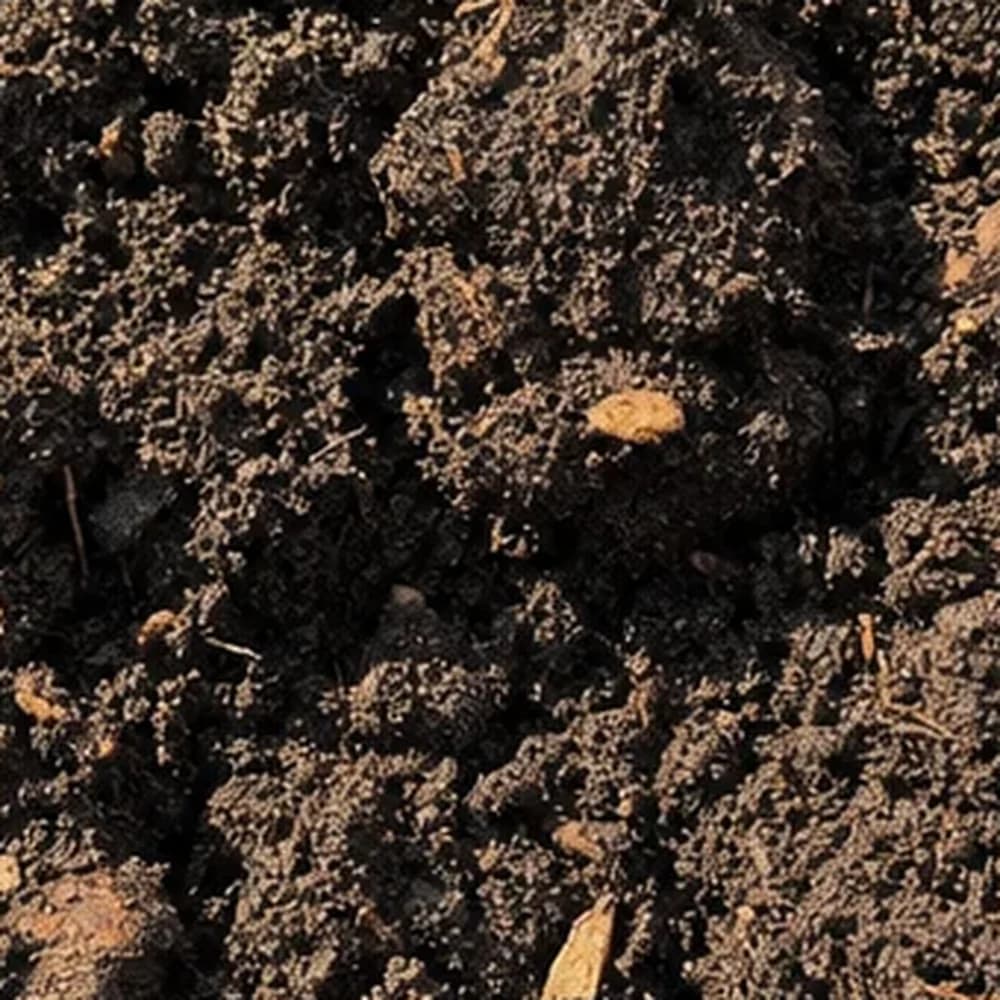
- This page sizes the layer plants live in. Garden mix is topsoil blended with compost, ready to plant into as delivered.
- The topsoil page sizes lawn work and finish grading. Pulverized topsoil is natural soil screened clean, not a blend.
- The dirt page sizes structure: raising a low corner, backfilling a trench, building a berm.
A deep raised box uses two of the three. Fill the bottom third with fill dirt or coarse organic matter that will compost in place, then put 8 to 12 inches of garden mix over it and calculate the two layers separately. On the tight clay east of the Fox Valley, and on the fast-draining sand of the Central Sands, the same approach works on native ground: instead of replacing a bed wholesale, till two or three inches of blend through the top six and repeat it the following season. It takes a third of the material and roots move through a gradual change far better than they move through a hard line between imported soil and what was already there.
Compost settles, so the boxes come up short by June
Blends high in organic matter settle 10 to 20 percent as the compost firms up, and most of that happens in the first few weeks. That is not an error in the estimate. It is what compost does.
- Fill slightly above the rim and water it in properly.
- Expect to top up once in the first month and an inch or two each spring after that.
- Tick the five percent for spillage; it is not a settlement allowance.
- Round the yardage up. Three boxes filled and one part filled is the outcome to avoid.
When the yardage is settled, set the quantity and a delivery date on the product page and check out. Delivery is arranged at checkout by ZIP code, and the truck needs firm ground with clear access to tip on. Ask for the pile on a tarp if it has to land on concrete. Bed shapes you would rather have checked can go through the contact page with your measurements.
Common questions
The new bed follows the shoreline path and bows out in the middle. What do I type?
Split it. A long rectangle down the straight section, plus one shorter and wider rectangle across the bulge, entered as two areas. Beds are forgiving, so err wide rather than narrow. Half a yard over on a border gets raked into the ends and nobody ever notices.
Last year's boxes sank. Is the depth I enter the gap, or the whole box?
The gap. Lay a straight edge across the frame, measure down to the soil in a few places, average the readings and enter that figure with the full footprint of the box as the area. Filling to the boards a second time from the bottom up would triple the order for no reason.
Does it matter if the boxes finish an inch below the boards?
For one season, no, and after settlement they will sit lower than that anyway. It matters in a deep box that gets planted straight away, because an inch of freeboard the plants do not use is an inch of rooting depth lost. Round the order up rather than plan to come back.
The number looks small next to the amount of soil I remember hauling last time. Can I trust it?
The arithmetic is exact and the yardage is right for the measurements you gave it. What people misremember is wheelbarrows, not yards: a cubic yard is roughly nine or ten loads, so four yards feels like a very long afternoon while still being four yards. Check your depth reading before you doubt the total.
Which of the three listings does a vegetable box actually want?
The blend. Screened topsoil on its own packs down in a box and has no feed in it, and fill dirt has had the organic matter taken out deliberately, which is why it holds a grade and grows nothing. Order the blend for the planting depth and keep the other two for the layers underneath.
Related calculators
Beds measured? Soil's a click away.
Garden soil, topsoil and fill dirt by the yard, free delivery included.