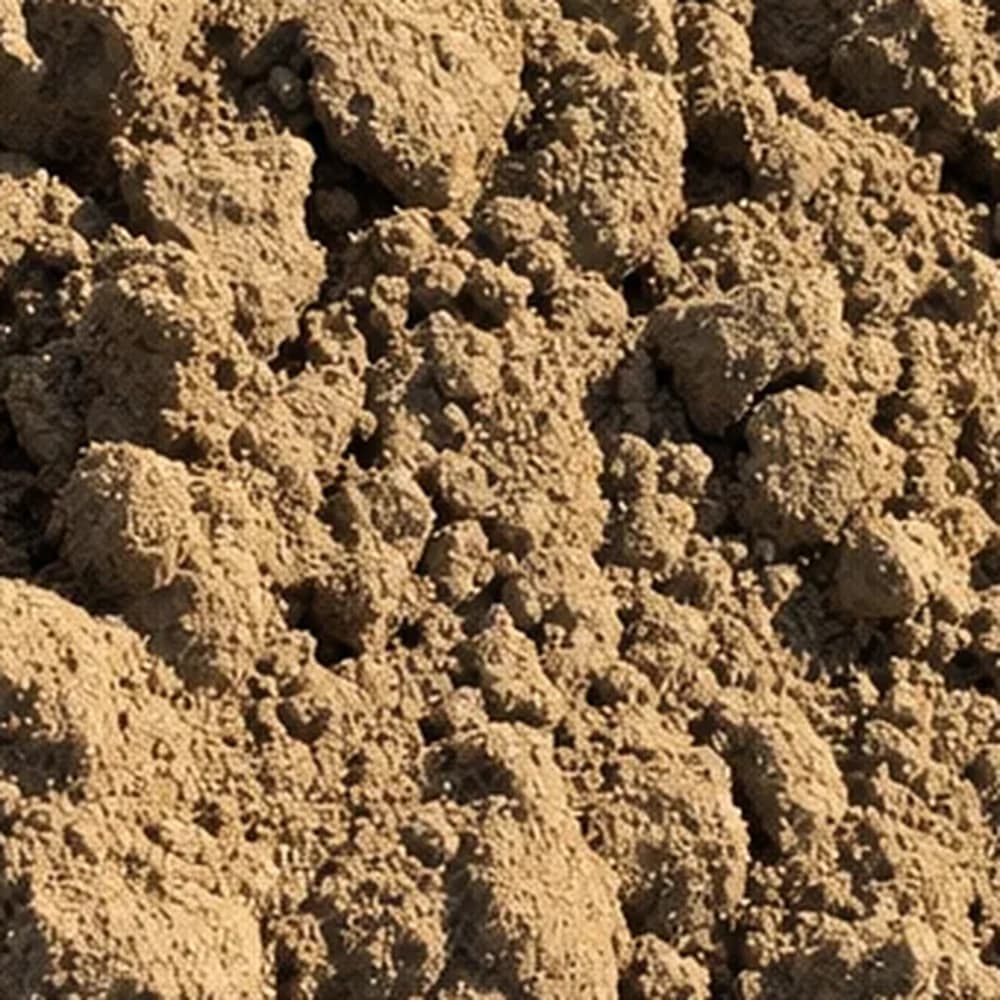
Dirt Calculator: Sizing Fill for Ground the Thaw Left Uneven
Enter your project dimensions
The last week of March is when a property tells you where it is low. Meltwater cannot soak into ground that is still frozen underneath, so it sits, and it sits in exactly the dips, trench lines and settled corners that need filling. Note them then. Fill them later, once the ground has drained enough to compact, because clay that smears under a boot will smear under a plate compactor too. The dirt calculator on this page turns those dips into cubic yards and tons, but only after you have decided the one number it cannot work out for you: how deep the hollow really is.
Three readings across the dip before a midpoint goes in the box
A low spot is never one depth. Walk a straight line across it with a board and a tape and take readings at the deep middle and at both thin edges, then use the midpoint. On sloping ground, take a reading every few feet instead of two, because a dip on a Driftless hillside is usually shallow uphill and deep at the bottom.
Checklist before you type anything:
- Set a board or a string line across the hollow at finished grade and measure down to the ground.
- Take at least three readings, more if the shape is long.
- Average them, and round up rather than down.
- Keep the area honest: measure where the fill will stop, not the whole lawn.
A trench is easier. Length, width and depth of the void, all in feet, and no averaging needed unless the bottom is uneven.
Entering a void rather than a surface
Every other calculator on this site sizes a layer going over something. This one sizes a hole.
- Shape. Rectangle, circle, or multiple areas, up to five added into one figure. A round stump crater goes in as a diameter.
- Size. Length and width in feet, or the diameter of the circle.
- Depth. Inches, between 0.25 and 24. That ceiling matters here more than anywhere else on the site.
- Material. The select list, which sets the weight behind the tonnage.
- Extra. The tick box, on by default, adds ten percent for compaction and spillage.
- Result. Cubic yards, tons and cubic feet, with the option to email the quote to yourself.
Anything deeper than two feet gets run as two passes. A three-foot excavation is twenty-four inches in one calculation and twelve in a second, added together. That suits the job anyway, since deep fill wants placing in lifts rather than one dump.
A dry yard runs about 2,400 pounds, a soaked one closer to 3,000
This site publishes fill dirt dry at roughly 2,400 lb per cubic yard, which is 1.20 tons, and wet at up to 3,000 lb, or 1.50 tons. Pulverized topsoil is lighter at about 2,200 lb, 1.10 tons, and garden mix lighter still at roughly 2,000 lb, an even ton to the yard.
Rain changes weight, not volume. The hole still needs the same number of yards whether the dirt arrives dry or soaked, so a wet forecast is a scheduling problem rather than an ordering one. What it does change is the wheelbarrow, which is why fill goes in best during a dry stretch.
To check the screen on paper, divide the depth in inches by twelve, multiply by the square footage for cubic feet, divide that by twenty-seven, and multiply the yards by one and one-fifth for tons.
Raising a lane approach and refilling a trench over the septic line
Made-up jobs. Your readings decide the real ones.
A low lawn corner that ponds every spring
Twenty-two by fourteen feet, averaging five inches down.
- 22 x 14 = 308 square feet
- 5 inches is 0.417 feet, so 308 x 0.417 = 128 cubic feet
- 128 divided by 27 = 4.75 cubic yards
- 4.75 x 1.20 = 5.7 tons
- With the ten percent ticked: 5.2 cubic yards, about 6.3 tons
Thirty feet of settled trench over a lateral
Two and a half feet wide, eighteen inches of void left after last year's backfill sank.
- 30 x 2.5 = 75 square feet
- 18 inches is 1.5 feet, so 75 x 1.5 = 112.5 cubic feet
- 112.5 divided by 27 = 4.2 cubic yards
- 4.2 x 1.20 = 5.0 tons
Place either one in six to eight inch lifts and compact each lift, or at minimum soak it through and let it stand. On a lawn repair, finish about half an inch proud so it settles flush instead of dishing again next March.
Black dirt goes on top, and this tool sizes what goes underneath
Fill dirt is mineral subsoil with the organic matter screened out, and the reason it holds a grade is that there is nothing in it left to rot. That also makes it useless for growing anything.
- Structure, grade, trenches, berms and backfill: this page.
- The four to six inches of growing depth that goes over the fill: the topsoil calculator, and pulverized topsoil is what most buyers here call black dirt.
- Raised beds and planting areas: the soil calculator, which carries the lighter blended weight of garden mix.
A regrade is therefore two orders, not one. Bring the fill dirt up to four to six inches below the finished height you want, then cap it. Keep organic debris out of the fill: buried wood rots, and a hole that opens five years from now costs more than the load did.
Loose fill loses height, so the hole is never the whole order
Loose fill placed without compaction commonly loses ten to fifteen percent of its height, so the yardage you measured is the yardage the hole had, not the yardage the job takes. Leave the ten percent ticked, then round the order up on top of that. Coming back for a second half load to finish a berm is the outcome everyone wants to avoid.
Time it for a dry stretch between the end of the thaw and the first hard freeze. Clay in the east and silt loam in the coulees both stay soft well after the surface looks workable, and frozen ground stops compaction altogether. When the yardage is settled, set your quantity and a date on the product page and check out. Delivery is arranged at checkout by ZIP code, and the truck needs a firm run to a spot it can tip on, which the delivery page sets out. The black dirt, stone and mulch for the rest of the job are all on the calculator hub. Odd shapes and anything you would rather have a second pair of eyes on can go through the contact page with your measurements.
Common questions
The wet corner sits on a coulee hillside, deep at the bottom and thin uphill. What goes in the depth box?
Take several readings down the fall rather than two across it, then average them. Fill that feathers to nothing at the top will be badly overstated by a two-reading average, so on any pronounced grade split the area into an upper rectangle and a lower one and enter both with their own figures.
Two settled patches sit either side of the lane. Can I do them together?
Yes. Multiple areas takes up to five, so enter each patch with its own length, width and average depth and read one combined yardage. That is also the quickest way to see whether the whole job is worth a bulk load or only a wheelbarrow or two.
The berm will have a stone border round its foot. Does that go in the measurement?
Not in this calculation. Measure the fill to where the soil stops and the border begins, then size the stone on its own calculator with its own depth. Two materials at two weights should never share one entry, because the tonnage will be wrong for both.
The hollow needs fill and then black dirt over it. Is that one number or two?
Two. Work out the fill to four to six inches below your finished grade, then run the remaining depth through the topsoil tool. Fill and pulverized topsoil sit on different weight rows, so a single calculation covering both layers would misprice one of them.
The dip in the lawn is a kidney shape with no straight edge anywhere. What now?
Cut it into a rectangle down the long middle and a couple of smaller pieces at the ends, then enter those as separate areas. Fill is the most forgiving material on this site for that treatment, because a quarter yard over just means the patch sits a shade proud before it settles.
Related calculators
Cheap by the yard, free to your gate.
Screened fill dirt for grading and backfill, delivered across Wisconsin.